

Board Performance · 2025
In this section14 topics
- Prevention of Conflicts of Interest3 items
- Prevention of the Use of Inside Information3 items
- Anti-Corruption4 items
- Whistleblowing3 items
- Selection of Directors & Chief Executives7 items
- Selection of Independent Directors3 items
- Director Development1 item
- Evaluation of Board & Subcommittee Performance6 items
- Subcommittees1 item
- Meeting Attendance & Remuneration4 items
- Supervision of Subsidiaries & Associated Companies5 items
- Board Duty Performance — Overview3 items
- Audit Committee Duty Performance1 item
- Executive Committee Duty Performance1 item
Prevention of Conflicts of Interest
Introduction
Conflict of Interest Policy
Executives and employees must perform their duties in the best interests of the company and exercise caution to prevent conflicts of interest. The following principles must be adhered to:
Perform duties transparently and cooperate with any company or relevant authorities' audits of duties at all times.
Refrain from engaging in business activities that compete with the company's interests, whether for personal gain or on behalf of others, which may harm the company directly or indirectly. This includes not becoming a partner, shareholder with decision-making authority, director, or executive in any competing business or one with similar characteristics to the company.
Report any potential conflicts of interest with the company, such as holding a position with a supplier or customer of the company, and inform the company immediately.
Do not seek personal gain or benefit for oneself or others using confidential information of the company.
In procurement, follow the company’s procedures and ensure transparency and accountability. Bribery in any form, whether with the government or private sector, is strictly prohibited.
Business-related entertainment and expenditures related to fulfilling business contracts must be conducted in accordance with the established procedures and must be auditable.
Has the Company Acted to Prevent Conflicts of Interest?
No
Number of Conflict-of-Interest Cases
| Metric | Current Year | Previous Year | Two Years Ago |
|---|---|---|---|
| Total number of cases or issues related to conflicts of interest (cases) | 0 | 0 | 0 |
Prevention of the Use of Inside Information
Has the Company Acted to Prevent the Use of Inside Information?
No
Operations in the Past Year
Insider Information Policy
Information and Communication Networks Public Company Limited (ICN) emphasizes the importance of supervising the use of inside information in accordance with the principle of good corporate governance in conducting business to prevent directors, executives, or employees from using or disclosing the company’s inside information to others and to comply with various regulations as determined by the Securities and Exchange Commission (SEC). The key points of the policy are as follows:
Inside Information means information that has not been disclosed to General Public and which is material to change the price or value of securities. Information that is considered “Inside Information” may include business performance results, entering into contracts, acquiring large projects, announcing dividend payments, capital increases or reductions, mergers and acquisitions, or changes in significant accounting policies, etc.
The company has the following criteria, guidelines, procedures, and measures to prevent the use of inside information as below:
The company will educate directors and executives on the obligation to report their ownership of company securities, including those held by their spouses or cohabiting partners, and minor children, to the SEC as per Section 59and penalties under Section 275f the Securities and Exchange Act B.E. 2535 (1992).
Directors and executives are required to prepare and submit reports on their own securities holdings, as well as those held by their spouses, cohabiting partners, and minor children, to the company’s secretary for forwarding to the SEC. The reports must be submitted within 30days of appointment as a director and/or executive, and whenever there are any changes.
The company prohibits directors, executives, employees, and staff who know the inside information from disclosing or using this confidential information or company business information for personal gain or the benefit of others, whether directly or indirectly, regardless of whether compensation is received.
The company requires that directors, executives, and those holding managerial positions in accounting or finance (assistant managing director level or equivalent) and related personnel, as well as their spouses and minor children, who have access to material inside information affecting securities prices, must refrain from buying or selling the company’s securities during a period prior to the public disclosure of financial statements or financial position. This restriction lasts for at least 30days before the public disclosure and for a period of at least 24hours after the inside information has been publicly disclosed.
The company prohibits directors, executives, employees, and former directors, executives, or employees who have resigned from disclosing inside information or company secrets, as well as the confidential information of the company's clients, to any external parties.
6. Directors, executives, and employees of the company, as well as former directors, executives, or employees, are obligated to maintain the confidentiality of inside information and may only use it for the benefit of the company's business operations. They are prohibited from using inside information for the benefit of other companies in which they are shareholders, directors, executives, employees, or staff.
The company has prevented the use of inside information by limiting access to information that has not yet been disclosed to the public, allowing only those who are relevant and necessary to know and organizing a system for maintaining the security of inside information. The data owners must ensure that relevant parties comply strictly with these policies.
Disclosure of information should only be carried out by authorized company personnel. General staff do not have the duty to disclose information, ensuring that information sharing is correct and consistent.
The company has set penalties for those who violate the inside information usage policy by disclosing information without permission, which causes damage to the company or related persons, whether directly or indirectly by considering disciplinary punishment according to the company’s regulations, ranging from warnings to termination of employment, along with legal liabilities.
Number of Inside-Information Cases
| Metric | Current Year | Previous Year | Two Years Ago |
|---|---|---|---|
| Total number of cases or issues related to the use of inside information to seek benefits (cases) | 0 | 0 | 0 |
Anti-Corruption
Has the Company Acted on Anti-Corruption?
Yes
Operations in the Past Year
The performance monitoring of the Private Sector Collective Action Against Corruption (CAC) policy in Thailand is as follows:
Topic 1. Donations, financial support, and political assistance.
Objective of the audit:
To ensure that The policies regarding donations, funding, and political assistance have the following characteristics:
1.1 Clear in its implementation.1.2 Approved by the company board or CEO. 1.3 Policy communicated to everyone inside and outside the company.
The request for reimbursement of the aforementioned expenses was made in accordance with established procedures, regulations, rules, and announcements. Furthermore, adequate and appropriate internal controls were in place, and the request was approved by the authorized person.
The company conducts regular performance audits and reports.
Audit Methodology: Internal auditors audited the anti-corruption policy. Regarding donations, sponsorships, and political assistance, the audit found that the policy aligns with the company's policies as announced by the Board of Directors regarding the anti-corruption policy and the anti-corruption manual. The policy outlines clear implementation procedures, is thoroughly communicated to all internal and external stakeholders, and is subject to audits of compliance with the policy, procedures, and controls, including verification of payments from the general ledger and journal accounts. The audit revealed no payments made as donations, sponsorships, or political assistance to any individual or organization.
The investigation revealed that:
The company has an anti-corruption policy. Regarding donations, financial support, and political assistance, these are in accordance with the company's policy as outlined in the Board of Directors' announcement on the anti-corruption policy and the anti-corruption manual.
The company is clear in its implementation of the anti-corruption policy regarding donations, financial support, and political assistance, as outlined in the Board of Directors' announcement on the anti-corruption policy and the anti-corruption manual.
The anti-corruption policy regarding donations, financial support, and political assistance has been approved by the Chairman of the Board.
The company communicates the anti-corruption policy regarding donations, financial support, and political assistance to all personnel, both internally and externally, through the company's intranet and internet systems (Good Governance Policy: Anti-Corruption Policy).
The request for reimbursement of the aforementioned expenses followed all procedures, regulations, and announcements. Adequate and appropriate internal controls were in place, exercised with due diligence, and approval was obtained from authorized personnel. For example, audits of payments, ledger accounts, and general journal entries revealed no payments made as donations, financial support, or political assistance to any individual. Or any other agency.
The company conducts regular performance audits and reports, at least once a year.
Topic 2. Sponsorship.
Objective of the audit:
To ensure that Sponsorship have the following characteristics:
1.1 Clear in its implementation.
1.2 Approved by the company board or CEO.
1.3 Policy communicated to everyone inside and outside the company.
The request for reimbursement of the aforementioned expenses was made in accordance with established procedures, regulations, rules, and announcements. Furthermore, adequate and appropriate internal controls were in place, and the request was approved by the authorized person.
The company conducts regular performance audits and reports.
Audit Methodology: Regarding the anti-corruption policy, specifically concerning funding, is it in accordance with company policy and the anti-corruption guidelines? Are the procedures for implementation clearly defined? Has it been approved by the company's board of directors or the CEO? Has the policy been thoroughly communicated to all internal and external stakeholders? Is compliance with the policy, procedures, and controls (such as auditing payments from the general ledger and journal accounts within the audit scope) regularly monitored? And are audits and reports on compliance conducted regularly?
The investigation revealed that:
The company has a clear anti-corruption policy regarding financial sponsorships. This policy, publicly available on the company website, outlines clear implementation procedures and is governed by an anti-corruption manual. Financial sponsorships are considered a form of business publicity, distinct from charitable donations, and may be made for business purposes, corporate securities, or to enhance the company's reputation, as signed by the CEO.
The company has established procedures for implementing the anti-corruption manual in accordance with the anti-corruption policy regarding financial sponsorships, as outlined in the Board of Directors' anti-corruption policy and manual. These procedures include analyzing the recipient's background, the intended use of funds, authorizing authorized reviewers and approvers, monitoring the use of funds for public benefit, and maintaining accurate accounting records.
The company communicates its anti-corruption policy regarding financial sponsorships to all internal and external stakeholders through its internal intranet and website. This is also reflected in the company's good governance policy.
The company's anti-corruption policy includes other channels such as email, bulletin boards, annual training, etc. The request for reimbursement of the aforementioned expenses followed established procedures, regulations, and announcements. Furthermore, adequate and appropriate internal controls were in place, and approval was obtained from authorized personnel. For example, audits of payments, ledger accounts, and general journals revealed that the accounting entries showed payments made for advertising and public relations purposes for various organizations and agencies, all related to the company's public relations campaigns.
The company conducts regular audits and reports on its performance, at least once a year.
Topic 3. Donation.
Objective of the audit:
To ensure that Donation have the following characteristics:
1.1 Clear in its implementation.
1.2 Approved by the company board or CEO.
1.3 Policy communicated to everyone inside and outside the company.
The request for reimbursement of the aforementioned expenses was made in accordance with established procedures, regulations, rules, and announcements. Furthermore, adequate and appropriate internal controls were in place, and the request was approved by the authorized person.
The company conducts regular performance audits and reports.
Audit Methodology: Regarding the anti-corruption policy, specifically concerning charitable donations, the following points should be examined: Does the policy align with the company's policies, the Board of Directors' resolution, and the anti-corruption guidelines? Are the implementation procedures clearly defined? Has it been approved by the Board of Directors or the CEO? Has the policy been thoroughly communicated to all internal and external stakeholders? Are compliance with the policy, procedures, and controls (such as auditing payments from the general ledger and daily ledger) regularly monitored and reported? Furthermore, are audits and reports on compliance conducted regularly?
The investigation revealed that:
The company has a clear anti-corruption policy, particularly regarding charitable donations. This policy, publicly available on the company website, outlines clear procedures for implementation and is governed by an anti-corruption manual. Charitable donations are defined as voluntary assistance to the community and society, genuinely used for public benefit, whether in the form of money, goods, time, or activities. They must support the successful achievement of project objectives and not involve any reciprocal benefits to any individual or organization, except for customary acknowledgments. The goal is to help those in need, benefit the public, and promote social well-being. This can be considered a form of business publicity, distinct from monetary donations which may be made for business purposes, corporate interests, or to enhance the company's reputation. Forms of charitable donation include cash, checks, credit cards, online payments; donations of goods such as clothing, books, food, or furniture; volunteering in various projects; and financial support for significant projects. The objectives of charitable donations are to assist those in need, improve quality of life, support education, health, arts and culture, strengthen community relationships, foster a sense of community, and build connections between donors and supporting organizations. Tax benefits may also be considered. Because certain types of donations may offer tax benefits and enhance an organization's image, giving them a positive boost and credibility, as evidenced by the anti-corruption guidelines signed by the company's CEO.
The company has established procedures for implementing the Anti-Corruption Guidelines in accordance with its Anti-Corruption Policy, specifically regarding charitable donations. These procedures, as outlined in the Board of Directors' Anti-Corruption Policy and the Anti-Corruption Guidelines, include: analyzing the recipient's financial status; analyzing the intended use of funds; requiring authorized personnel to review and approve donation amounts; monitoring whether donated funds are genuinely used for public benefit; and maintaining accurate accounting records.
The company has implemented an anti-corruption policy, including provisions for charitable donations, and communicates this information thoroughly to everyone, both internally and externally. This is done through the internal intranet and website, as well as through other channels such as email, bulletin boards, and annual training, in accordance with the company's good governance and anti-corruption policies.
The request for reimbursement of the aforementioned expenses was made in accordance with established procedures, regulations, and announcements. Furthermore, adequate, appropriate, and diligent internal controls were in place, and approval was obtained from authorized personnel. For example, audits of payments, ledger accounts, and general journals revealed that payments were made as charitable donations to various organizations, and a random check of the details confirmed that these donations were genuinely made to charitable organizations.
The company conducts regular performance audits and reports, at least once a year.
Form of Anti-Corruption Operations
| Operation |
|---|
| The monitoring of the evaluation of compliance with the anti- corruption policy |
| The participation in anti-corruption projects |
| Review of appropriateness in anti-corruption |
| Communication and training for employees on anti-corruption policy and guidelines |
| Review of the completeness and adequacy of the process by the Audit Committee or auditor |
Number of Corruption Cases
| Metric | Current Year | Previous Year | Two Years Ago |
|---|---|---|---|
| Total number of cases or issues related to corruption (cases) | 0 | 0 | 0 |
Whistleblowing
Has the Company Implemented Whistleblowing Procedures?
Yes
Operations in the Past Year
Whistleblowing OperationsAudit Objective: To ensure that the company has established channels for reporting complaints and that statistics, data, or complaints are collected in accordance with the Anti-Corruption Manual, through a three-member audit committee. The internal auditors therefore investigated the following complaint channels:
Mailbox Email: icn_ac@icn.co.th
Email: segsan.r@icn.co.th
Email: nithi.n@icn.co.th
Email: apinun.r@icn.co.th
Mail Channel: To the Audit Committee Information and Communication Networks Public Company Limited D.K.J. Building, 5th Floor, 393 Sukonthasawat Rd., Lat Phrao Subdistrict, Lat Phrao District, Bangkok 10230, Thailand
Company Online Media Channel: www.icn.co.th under the heading > Business Ethics > Complaints and Whistleblowing
Other Channels: Internal Suggestion/Comment/Complaint Box
Audit Methodology and Results: The internal auditors tested all four complaint channels mentioned above and obtained the following results:
By sending emails to all three members of the Audit Committee via the mailbox: icn_ac@icn.co.th, a reply was received stating that from 2024 to March 31, 2025, no complaints had been received through that email channel.
Inquiries were made to the Audit Committee, the Audit Committee Secretary, and the person responsible for receiving documents and letters in the Human Resources Department. The Purchasing and Administration Department of the company, General Administration Division, was informed that no one received a letter from an external party addressed to the Audit Committee (regarding various complaints). It was found that no one on the Audit Committee received any such letter.
A check of the company's online communication channel, www.icn.co.th, under the heading > Business Ethics > Complaints and Whistleblowing, revealed no electronic letters from external parties addressed to the Audit Committee.
A check of other channels, including the internal suggestion/comment/complaint box, also revealed no complaints from external or internal parties addressed to the Audit Committee. In conclusion, no complaints regarding corruption were found through the aforementioned channels.
Number of Whistleblowing Cases
| Metric | Current Year | Previous Year | Two Years Ago |
|---|---|---|---|
| Total number of cases or issues received through whistleblowing channels (cases) | 0 | 0 | 0 |
Selection of Directors & Chief Executives
Selection, Development & Evaluation — Introduction
The operations of the board and sub-committees emphasize transparency through diverse recruitment processes (Skill Matrix), continuous knowledge development, and annual self-assessment and full board performance evaluation (Self-Assessment) in accordance with good corporate governance principles. which helps ensure that the board performs its duties diligently, independently, and in alignment with business objectives.
Selection — Introduction
The recruitment of the Board of Directors is conducted through the "Nomination and Remuneration Committee," which considers the board's structure, size, and composition to ensure diversity in terms of knowledge, skills (Skill Matrix), experience, and necessary specialized expertise, in alignment with the organizational strategy. This process involves the disclosure of clear and fair nomination policies and procedures.
Are Directors Selected Through the Nomination Committee?
Yes
Are Chief Executives Selected Through the Nomination Committee?
Yes
Number of Directors from Major Shareholders
0
Rights of Minority Shareholders on Director Appointment
Information and Communication Networks Public Company Limited ("the Company") recognizes and appreciates the importance of treating shareholders fairly and equally to promote good corporate governance principles, which is one of the factors contributing to the success of the business. Therefore, the Company provides an opportunity for minority shareholders to propose meeting agendas and nominate individuals for election as directors in advance, prior to the Annual General Meeting of Shareholders, which is typically held around April each year. For the 2025 Annual General Meeting of Shareholders, shareholders can exercise their rights from October 9, 2024, to January 9, 2025. And to ensure clear and transparent consideration procedures and methods, the Company has established criteria for granting shareholders the right to propose meeting agendas and nominate individuals for consideration as directors in advance at the Annual General Meeting of Shareholders, and these procedures have been published on the Stock Exchange of Thailand's website and the Company's website at https://www.icn.co.th under the section “Investor Relations > Shareholder Information > Shareholder Meetings”.
However, upon the specified deadline, no shareholder expressed an intention regarding this matter. Therefore, the Company has also announced the results of the shareholders' right to propose meeting agendas and nominate individuals for consideration as directors for the 2025 Annual General Meeting of Shareholders on the Stock Exchange of Thailand's website.
Method of Director Appointment
| Method | Other — Please Specify |
|---|---|
| Other | The appointment of each director must be approved by a majority vote of shareholders present and voting at the meeting. |
Selection of Independent Directors
Introduction
The Board of Directors will jointly conduct an initial review of the qualifications of individuals to be appointed as independent directors, considering the qualifications and prohibited characteristics of directors as stipulated by the Public Limited Company Act, the Securities and Exchange Act, announcements of the Capital Market Supervisory Board, as well as other relevant announcements, regulations, and/or rules. Furthermore, the Board of Directors will select independent directors based on their expertise, work experience, and other relevant suitability factors. Subsequently, these nominations will be presented to the shareholders' meeting for consideration and appointment as directors of the company. The company's policy is to appoint independent directors comprising at least one-third of the total number of directors, and there must be no fewer than three independent directors.
Criteria for Selecting Independent Directors
Qualifications of Independent Directors
-
Holds no more than 1 percent of the total voting shares of the company, its parent company, subsidiaries, associated companies, or juristic persons of individuals who may have a conflict of interest, including shares held by related persons.
-
Is not or has not been a director involved in the management, an employee, staff, a salaried advisor, or a controlling person of the company, its parent company, subsidiaries, associated companies, same-level subsidiaries, or juristic persons who may have a conflict of interest, unless such characteristics have ceased for at least 2 years prior to the date of submitting the application for permission to the Office of the Securities and Exchange Commission.
-
Is not a person with a blood relationship or a relationship by legal registration, such as parents, spouses, siblings, and children, including spouses of children, of executives, major shareholders, controlling persons, or individuals proposed to be executives or controlling persons of the company or its subsidiaries.
-
Has no or has not had a business relationship with the company, its parent company, subsidiaries, associated companies, or juristic persons who may have a conflict of interest in a manner that may impede their independent judgment. Furthermore, is not or has not been a major shareholder, a director who is not an independent director, or an executive of a person having a business relationship with the company, its parent company, subsidiaries, associated companies, or juristic persons who may have a conflict of interest, unless such characteristics have ceased for at least 2 years prior to the date of submitting the application for permission to the Office of the Securities and Exchange Commission.
-
Is not or has not been an auditor of the company, its parent company, subsidiaries, associated companies, or juristic persons who may have a conflict of interest, and is not a major shareholder, a director who is not an independent director, an executive, or a managing partner of an audit firm where an auditor of the company, its parent company, subsidiaries, associated companies, or juristic persons who may have a conflict of interest is affiliated, unless such characteristics have ceased for at least 2 years prior to the date of submitting the application for permission to the Office of the Securities and Exchange Commission.
-
Is not or has not been a professional service provider, including legal or financial advisor services, who has received service fees exceeding 2 million baht per year from the company, its parent company, subsidiaries, associated companies, or juristic persons who may have a conflict of interest. In the case where the professional service provider is a juristic person, this includes being a major shareholder, a director who is not an independent director, an executive, or a managing partner of that professional service provider, unless such characteristics have ceased for at least 2 years prior to the date of submitting the application for permission to the Office of the Securities and Exchange Commission.
-
Is not a director appointed to represent the directors of the company, major shareholders, or shareholders who are related to the major shareholders of the company.
-
Does not engage in a business of the same nature that is significantly competitive with the company's business, or is not a significant partner in a partnership, or is a director involved in the management, an employee, staff, a salaried advisor, or holds more than 1 percent of the total voting shares of another company that engages in a business of the same nature and is significantly competitive with the company's business.
-
Has no other characteristics that prevent them from giving independent opinions regarding the company's operations. Each independent director shall serve a term of no more than 9 years, without exception.
Did Any Independent Director Have a Business or Professional Relationship?
No
Director Development
Director Development — Introduction
The company continuously promotes the development of directors' potential, such as new director orientation, participation in courses offered by the Thai Institute of Directors (IOD), and study visits, to ensure directors are always up-to-date with their roles, responsibilities, relevant laws, and regulations. Developing transparent and accountable directors involves ensuring that directors possess the knowledge, understanding, and ethics required for decision-making. This begins with an open recruitment process, clear role definition, knowledge development training, and performance evaluation based on responsibilities, thereby promoting good governance and trust in the organization.
Guidelines for Developing Transparent and Accountable Directors:
-
Transparent Recruitment Process: Implement a clear, fair, and verifiable director recruitment policy, considering knowledge, abilities, expertise, and ethics, without discrimination.
-
Defining Accountability: Clearly define the scope of authority and responsibilities (Charter) of the Board of Directors and individual directors in writing, in compliance with laws, regulations, and organizational culture.
-
Continuous Training and Development: Provide orientation for new directors and ongoing knowledge development regarding business, risks, laws, and the CG Code, to align with the changing business environment.
-
Performance Evaluation: Implement a clear performance evaluation system for both the entire Board of Directors and individual directors, reflecting their responsibilities.
-
Information Disclosure and Transparency: Directors must be accountable for their decisions and disclose relevant information accurately, completely, and in a timely manner, including both financial and operational reports.
-
Adherence to Ethical Principles: Promote an Integrity Culture, where directors must perform their duties with responsibility, diligence, and honesty.
Evaluation of Board & Subcommittee Performance
Evaluation — Introduction
The company conducts annual performance evaluations for the Board of Directors and its sub-committees. The performance evaluation of the Board of Directors and its sub-committees, which include the Audit Committee, the Corporate Sustainability Committee, the Executive Committee, the Nomination and Remuneration Committee, and the Risk Management Committee, is conducted on a committee-by-committee basis. (Full Board) and individual basis. (Individual) covering structure, meetings, roles and responsibilities, and management. The evaluation results will be summarized and analyzed to plan for improved operational performance. The evaluation forms for the Board of Directors and all sub-committees adhere to consistent evaluation criteria, referencing the self-assessment form for directors from the Stock Exchange of Thailand in 2015. The company's board evaluation process involves the Company Secretary and the secretaries of the sub-committees distributing the evaluation forms to the directors for assessment and return to the company. The company then presents the evaluation results to the Board of Directors' meeting for collective consideration of the results and to determine improvement guidelines for enhanced operational performance.
Evaluation Criteria — Introduction
Board performance evaluation is a process of reviewing the performance of the board as a whole and individual directors, in accordance with the CG Code, at least once a year. It focuses on structure, qualifications, responsibilities, meetings, and independence. Typically, questionnaires are used to score performance as percentages, such as Excellent (>90%), Very Good (>80%), Good (>70%). It generally covers 6 main topics according to the guidelines of the Stock Exchange of Thailand (SET), comprising: 1) Board structure and qualifications: diversity of skills (Skill Matrix), proportion of independent directors; 2) Roles, duties, and responsibilities: strategy setting, risk oversight, internal control; 3) Board meetings: frequency, receipt of agenda documents in advance, expression of opinions; 4) Directors' performance of duties: preparation, consistent attendance at meetings, independence in decision-making; 5) Relationship with management: communication, executive performance evaluation; 6) Director development: training, succession planning (Succession Plan).
Criteria for Evaluating Board Performance
Criteria for evaluating the performance of the Board of Directors and all sub-committees help the Board identify strengths and areas for improvement to elevate good corporate governance standards and enhance operational efficiency. This includes both Board/Committee Self-Assessment (evaluation of the performance of the entire Board) and Individual Self-Evaluation (assessment of personal responsibility), covering key issues such as:
(1) Board structure and qualifications: Diversity, skills, knowledge, balance, suitability, and independence
(2) Roles, duties, and responsibilities of the Board: Strategy formulation, risk management, internal control systems, and accountability to shareholders
(3) Board meetings: Regularity, preparation, agenda setting, and receipt of sufficient information
(4) Directors' performance of duties: Participation and independent expression of opinions
(5) Relationship with management: Communication and ensuring management performs duties according to objectives
(6) Directors' self-development and executive development: Training to enhance skills
Evaluation in the Past Year — Introduction
The evaluation of the Board of Directors' performance in 2025 aims to ensure that the Board performs its duties transparently in accordance with its roles and responsibilities, promotes the efficiency of strategic decision-making, and manages risks appropriately. This is This is a crucial process for reviewing efficiency, structure, accountability, and best practices to enhance management effectiveness and good governance, and Constructive feedback is received to develop strengths and address weaknesses, which leads to improved organizational management. conducted by evaluating the entire Board, sub-committees, and individual members, with the results utilized to improve performance and build confidence among shareholders.
Evaluation of Board Performance in the Past Year
The Board of Directors conducted its self-assessment for the year 2025, both as a committee and individually. The assessment results were rated as "Excellent" (average score of 90% or higher). All directors actively participated in providing constructive feedback and played a crucial role in formulating strategies and risk management systems in accordance with good corporate governance principles. Furthermore, the Board plans to enhance its knowledge in new technologies to further improve its decision-making capabilities in the coming year. The summary of the Board of Directors' performance assessment for the year 2025 indicates that the majority of the Board members performed their duties in accordance with good corporate governance principles, as follows:
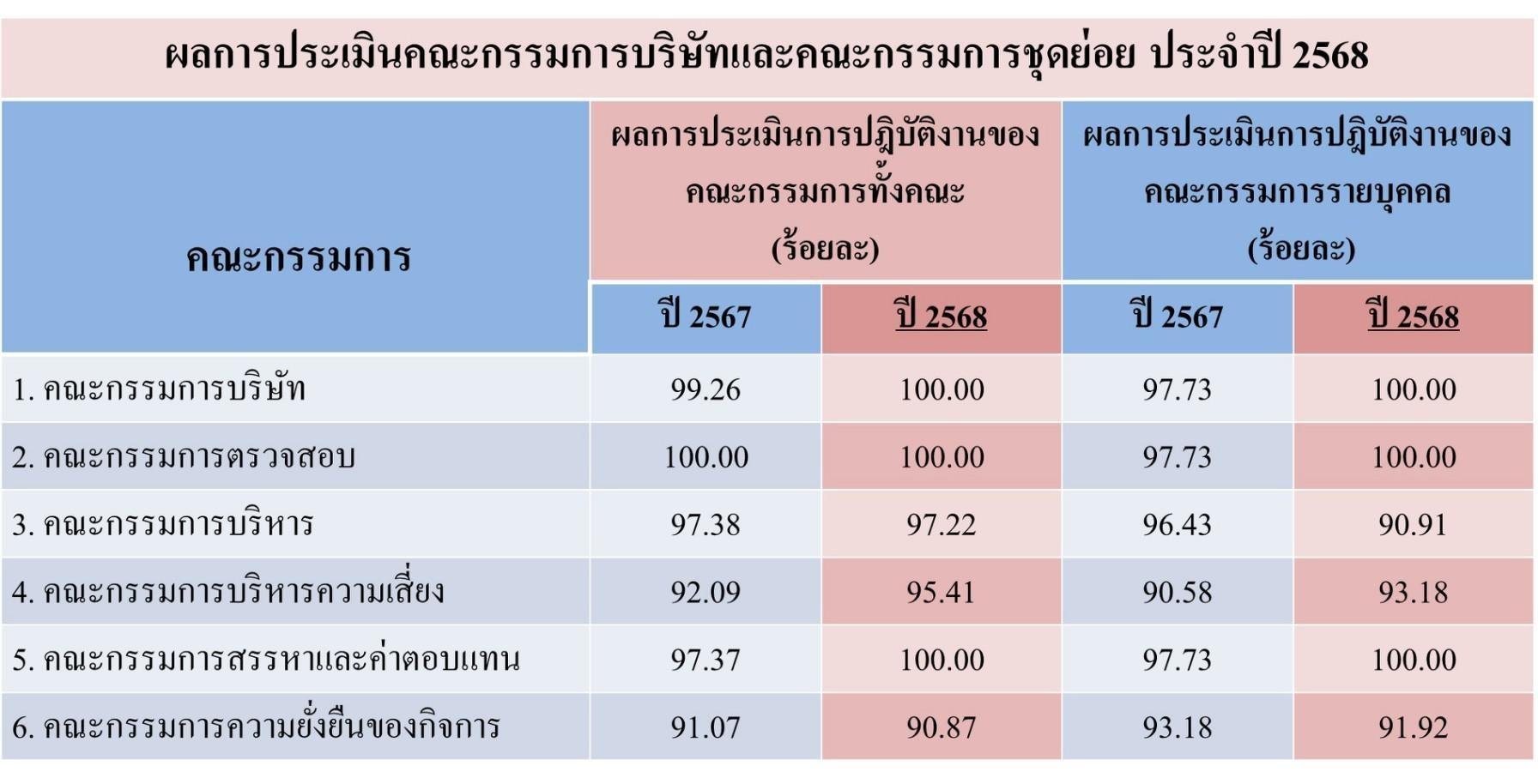
Excellent (>90%), Very Good (>80%), Good (>70%)
Evaluation Results
| Evaluated Body | Group — Carried Out? | Group — Grade / Average Score | Group — Grade / Full Score | Individual (Self-Assessment) — Carried Out? | Individual (Self-Assessment) — Grade / Average Score | Individual (Self-Assessment) — Grade / Full Score | Cross (Assessing Other Directors) — Carried Out? |
|---|---|---|---|---|---|---|---|
| Board Of Director | Y | Excellent/100 | Excellent/100 | Y | Excellent/100 | Excellent/100 | N |
| Audit Committee | Y | Excellent/100 | Excellent/100 | Y | Excellent/100 | Excellent/100 | N |
| Executive Committee | Y | Excellent/97.22 | Excellent/100 | Y | Excellent/90.91 | Excellent/100 | N |
| Other Subcommittee | Y | Excellent/95.41 | Excellent/100 | Y | Excellent/93.18 | Excellent/100 | N |
| Other Subcommittee | Y | Excellent/100 | Excellent/100 | Y | Excellent/100 | Excellent/100 | N |
| Other Subcommittee | Y | Excellent/90.87 | Excellent/100 | Y | Excellent/91.92 | Excellent/100 | N |
Subcommittees
Subcommittees
| Results of the Subcommittee's Duty Performance |
|---|
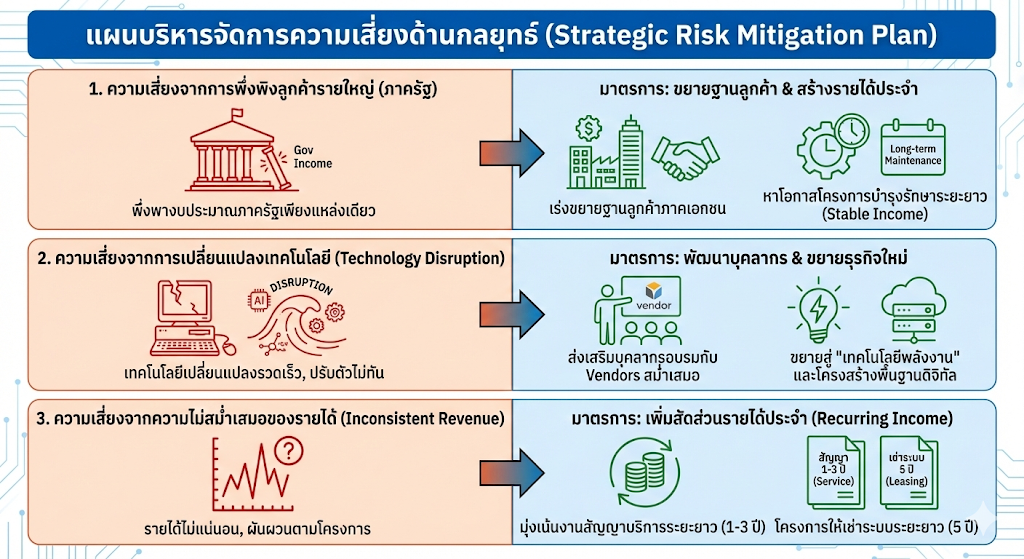
Summary of Key Risk Management Committee Performance in 2025 1. Strategic Risk 1.1 Reliance on Large Customers Risk: Although government clients remain a significant revenue base, the company has accelerated its customer base expansion to include private sector clients in the energy and industrial factory groups, as well as increasing the proportion of recurring income from maintenance work and Managed Services to stabilize cash flow and reduce sole reliance on government budgets. Summary of Risk Management Measures:
1.2 Technology Disruption Risk: The information technology and telecommunications industry is undergoing rapid and disruptive changes, particularly with the advent of Artificial Intelligence, Cloud Computing, and 5G technologies. This has led to a decrease in demand for traditional hardware and a shift towards software and platforms. Such technological leaps impact traditional service models. Therefore, the company has adjusted its strategy to become a leader in comprehensive Digital Infrastructure, expanding its business into the Data Center and AI Solutions markets to mitigate risks from reliance on older technologies and create a new S-Curve for the organization. Summary of Risk Management Measures:
1.3 Revenue Volatility Risk: The project-based nature of the business means revenue recognition depends on the successful delivery of each installment and the volume of projects won annually. This can lead to revenue inconsistency in certain quarters, especially during transitions between old project completions and new project commencements. If the company experiences gaps in project acquisition or delays in delivery, it will directly impact the overall annual performance. Summary of Risk Management Measures:
Summary of Strategic Risk Management Plan
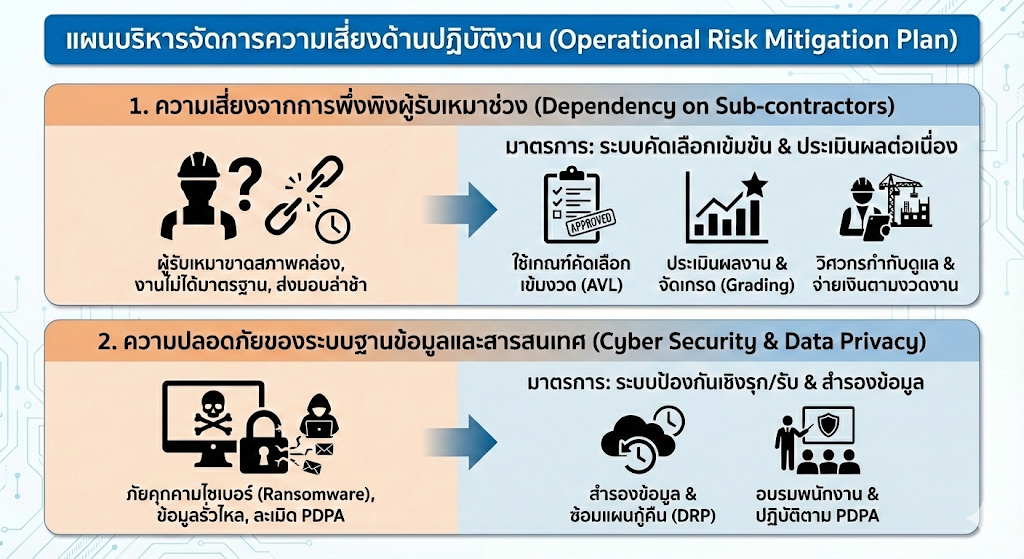
2. Operational Risk 2.1 Dependency on Sub-contractors Risk: In implementing large-scale projects covering nationwide areas, such as Fiber Optic network deployment, radio communication network deployment, or long-term equipment leasing, the company must manage resources with maximum efficiency. Therefore, specialized or locally available sub-contractors are engaged. If a sub-contractor faces financial liquidity issues, labor shortages, or fails to deliver work to standard, it will directly impact the company's costs and reputation. Summary of Risk Management Measures:
2.2 Cyber Security & Data Privacy Risk: In an era where the company is moving towards Data Center and digital infrastructure businesses, data is considered the most valuable asset, encompassing both trade secrets and personal information. Current cyber threats, such as ransomware, are becoming more severe. If information systems are attacked, it will severely impact customer confidence and the organization's image. Summary of Risk Management Measures:
Summary of Operational Risk Management Plan
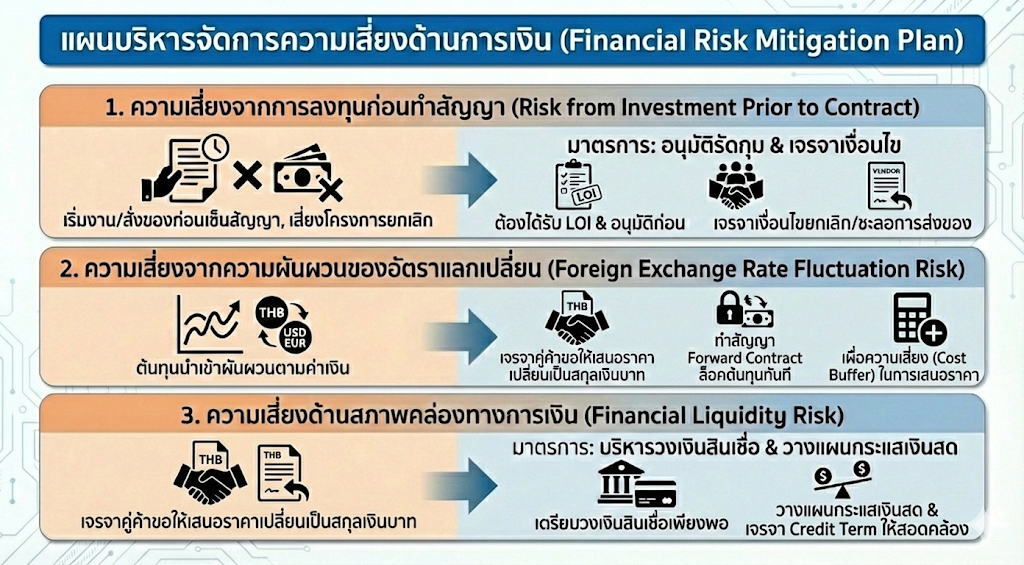
3. Financial Risk 3.1 Risk from Providing Services or Ordering Equipment Prior to Contract Signing: In the highly competitive telecommunications system integration (Turnkey Project) business, speed of delivery is a critical factor for gaining an advantage. In some cases, the company may need to commence certain activities in advance, such as site surveys, system design, or ordering long lead-time equipment, to meet customer deadlines. Undertaking such activities before the official contract signing carries risks if the project is canceled or contract terms are subsequently changed, potentially leading the company to bear sunk costs. Summary of Risk Management Measures:
3.2 Foreign Exchange Rate Risk: In some projects, the company needs to import IT equipment or network devices from abroad, which are mostly traded in US dollars (or Euros), while the company's primary income from service fees is in Thai Baht. Uncontrollable fluctuations in foreign exchange rates can directly impact project costs and the company's gross margin, especially for long-duration projects. Summary of Risk Management Measures:
3.3 Financial Liquidity Risk: Large-scale projects, such as the construction of base stations or data centers, require significant working capital for materials, equipment, and sub-contractor fees. Meanwhile, payments from customers (especially government agencies) are typically made in installments, which must undergo stringent and potentially time-consuming acceptance processes. Delays in work acceptance can lead to a cash flow mismatch, affecting the company's liquidity. Summary of Risk Management Measures:
Summary of Financial Risk Management Plan
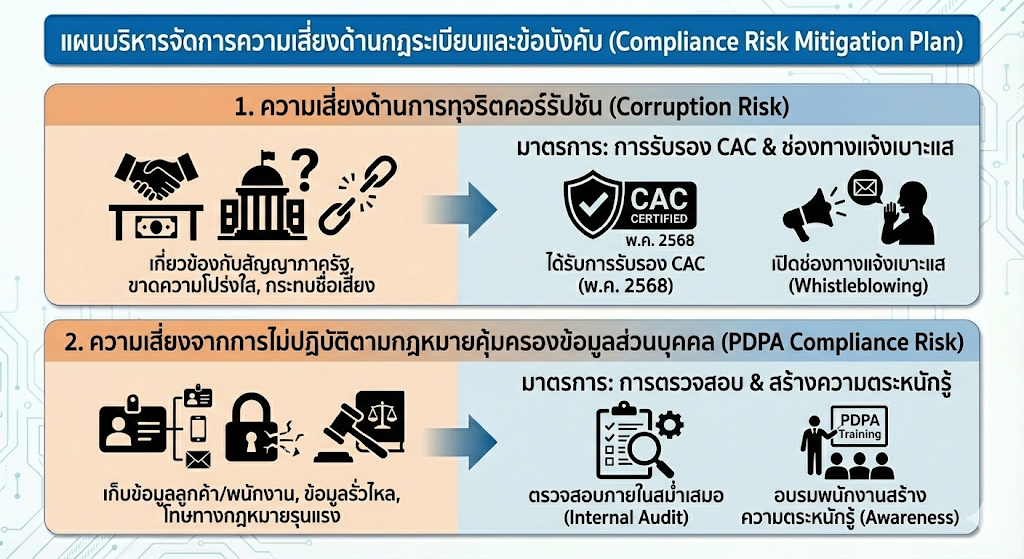
4.1 Corruption Risk: As the company's core business involves bidding for projects and contracting with government agencies and state enterprises, which are high-risk groups regarding transparency and influence, a lack of robust control measures could lead to unintentional corrupt practices by employees or accusations of involvement in bribery. This would severely impact the company's reputation, image, and status as a partner with government entities. Summary of Risk Management Measures:
4.2 PDPA Compliance Risk: In the company's normal business operations, including system integration projects, maintenance services, and internal organizational management, it is necessary to collect, use, and disclose personal data of various stakeholders. This includes contact information for clients (both government and private), business partners, sub-contractors, and a large number of internal employees. If the processes for storing and processing this data are not stringent, leading to data breaches or unauthorized use, it will constitute a violation of the Personal Data Protection Act, which carries severe civil, criminal, and administrative penalties, and also impacts the organization's credibility. Summary of Risk Management Measures:
Summary of Regulatory and Compliance Risk Management Plan
|
A summary of the key duties performed by the Nomination and Remuneration Committee is as follows: In considering various important matters, the Nomination and Remuneration Committee reported the meeting results along with its opinions and recommendations to the Board of Directors for consideration. The key points can be summarized as follows:
The Nomination and Remuneration Committee has considered, screened, nominated, and selected individuals for the position of Chief Executive Officer. The selection process involved identifying individuals who fully meet the qualifications specified by the Securities and Exchange Commission (SEC) and the Stock Exchange of Thailand (SET), and who do not possess any prohibited characteristics as stipulated by law. Furthermore, candidates must possess knowledge, abilities, transparent work experience, integrity, and responsibility, as well as being suitable and beneficial to the company's business operations. These candidates are then proposed to the Board of Directors meeting and the Shareholders' meeting (in the case of director nominations) for further approval. Directors with a conflict of interest will not participate in or vote on such matters. In 2025, the company conducted nominations and selections for sub-committee members and senior executives.
The Nomination and Remuneration Committee has reviewed the criteria and methods for the nomination of directors, sub-committee members, and senior executives to ensure that such criteria are appropriate and consistent with current circumstances.
To incentivize and retain employees with knowledge, skills, and good performance, the Nomination and Remuneration Committee, in conjunction with the Executive Committee and the Human Resources Department, has considered the criteria for determining the annual salary increase rate for 2026, the annual bonus for 2025, and the bonus payment policy. The company's salary increase and bonus rates are appropriate and consistent with economic conditions and the company's performance.
In accordance with the good corporate governance guidelines of the Stock Exchange of Thailand, which require annual self-assessment by the Board of Directors and sub-committees, the self-assessment forms for the Board of Directors (collective and individual) have been prepared according to the guidelines of the Stock Exchange of Thailand for the Board of Directors and the company's sub-committees to conduct self-assessments of their performance at least once a year. This is to provide the Board with an opportunity to collectively review performance and propose improvements. The preparation of the collective and individual self-assessment forms for the Board of Directors for the year 2025. The 2025 annual assessment covered a total of 4 topics: 1) Structure and Qualifications, 2) Meetings, 3) Roles, Duties, and Responsibilities, and 4) Development and Training of the Nomination and Remuneration Committee. The collective assessment had a full score of 76 points, and the individual self-assessment form for 2025 had a full score of 44 points. The results of the 2025 annual assessment showed that the collective assessment received a total of 76 points out of a full score of 76 points, or 100%, and each individual director received a total of 44 points out of a full score of 44 points, or 100%. Nomination of individuals for appointment as directors, sub-committee members, and senior executives of the company in the year 2025.
The Nomination and Remuneration Committee has performed its assigned duties to the best of its ability, with prudence, thoroughness, transparency, and independence, in accordance with good corporate governance principles, which will result in maximum benefit to all stakeholders. The Committee is committed to performing its duties with equality and fairness to ensure the company's stable and sustainable development. |
The key aspects of the Corporate Sustainability Committee's performance are summarized as follows: 1. Consider approving the preparation of the Corporate Sustainability Committee's performance report. Over the past year, and disclosed in the Annual Information Statement / Annual Report (Form 56-1 One Report) in electronic format (e-One Report), comprehensively covering all 3 dimensions: 1) Environmental Dimension, 2) Social Dimension, and 3) Governance & Economic Dimension. 1) Environmental Dimension
2) Social Dimension
3) Governance & Economic Dimension
To ensure transparent management and alignment with sustainable growth, the company has reviewed the operations of its Board and management, focusing on 3 key issues:
As operations primarily rely on information technology, the company places the highest importance on cyber risk management. In 2025, significant goals achieved include:
The company has reviewed its transparency and anti-corruption policies in all forms, increasing the stringency of Supply Chain Management through rigorous evaluation and screening of business partners and sub-contractors. This ensures that the company's suppliers conduct business ethically, comply with laws, and align with the organization's ESG practices.
The company recognizes the importance of risk management to support the smooth achievement of its goals as a telecommunications system integrator. In 2025, the company focused on managing operational risks while also laying the groundwork to address sustainability risks, as follows:
2. Consider developing self-assessment forms for the Board of Directors, both as a committee and individually. Comprising 4 topics: 1) Structure and Qualifications, 2) Meetings, 3) Roles, Duties, and Responsibilities, and 4) Development and Training of the Corporate Sustainability Committee. The overall assessment results, as disclosed in the Annual Information Statement / Annual Report 2025 (Form 56-1 One Report) in electronic format (e-One Report), are at an "Excellent" level. This is to utilize the assessment results and recommendations for improvements, which will lead to sustainable development and enhanced operational efficiency. The Corporate Sustainability Committee has performed its assigned duties to its fullest capability and is committed to continuously developing its social and environmental responsibility operations, alongside management based on good corporate governance principles. It is confident that these actions will be a significant step towards achieving the company's objectives, benefiting society, the environment, and all stakeholders, as well as fostering the company's continued sustainable growth. |
Meeting Attendance & Remuneration
Justification for Directors' Non-Attendance
Information and Communication Networks Public Company Limited ("the Company") wishes to inform you that Mr. Segsan Roylapcharoenporn, Chairman and Independent Director, who was unable to attend the Board meeting due to needing to recover from medical treatment, passed away on December 26, 2025.
Remuneration — Introduction
Information and Communication Networks Public Company Limited ("the Company") recognizes the importance of the roles, duties, and responsibilities of its directors, who are crucial individuals in conducting business to achieve its objectives or goals and to foster stable and sustainable growth. The Board of Directors should comprise directors with diverse qualifications, encompassing skills, experience, and specific expertise beneficial to the Company, as well as dedicating appropriate time and effort to performing their duties to achieve the objectives or goals, maximize benefits for shareholders, and ensure fairness to all stakeholders and relevant parties.
Types of Remuneration of the Board of Directors
The Company determines the remuneration of directors and sub-committee members in accordance with the principles and policies set by the Board of Directors within the framework approved by the shareholders' meeting. The remuneration of directors is comparable to the levels practiced in the industry, taking into account experience, duties, scope of roles and responsibilities, as well as the expected benefits from each director. Directors assigned additional duties and responsibilities, such as being members of sub-committees, should receive appropriate additional remuneration. Furthermore, directors' remuneration must be approved by the shareholders.
Remuneration or Benefits Payable to the Board
| Metric | Amount (Baht) |
|---|---|
| Remunerations or benefits pending payment to the board of directors over the past year (baht) | 0 |
Supervision of Subsidiaries & Associated Companies
Does the Company Have Subsidiaries or Associated Companies?
Yes
Is There a Mechanism for Overseeing Subsidiaries and Associated Companies?
Yes
Mechanism for Overseeing Management of Subsidiaries
The Company has established a policy for the supervision and management of subsidiaries and/or associate companies, with the objective of defining direct and indirect measures and mechanisms to enable the Company to supervise and manage the operations of its subsidiaries and/or associate companies, including monitoring and ensuring that subsidiaries and/or associate companies comply with the prescribed measures and mechanisms as if they were units of the Company itself, and in accordance with the Company's policies, as well as the Public Limited Company Act, the Civil and Commercial Code, the Securities and Exchange Act, and all relevant notifications, regulations, criteria, and other applicable laws. This is to safeguard the Company's investment interests, with details as follows:
-
The Company shall appoint individuals as its representatives to serve as directors in subsidiaries and/or associate companies, proportionate to its shareholding in each company, to oversee and ensure that the subsidiaries and/or associate companies operate in compliance with laws, good corporate governance policies, and other policies of the Company. However, the appointment of the Company's representatives as directors in subsidiaries and/or associate companies must be considered and approved by the Board of Directors' meeting, taking into account the suitability of each company.
-
If any subsidiary and/or associate company enters into any transaction or undertaking that falls under the acquisition or disposition of assets as per the Capital Market Supervisory Board's notification regarding the acquisition or disposition of assets, or a connected transaction as per the Capital Market Supervisory Board's notification regarding connected transactions, which would require the Company to obtain approval from the Board of Directors' meeting and/or the shareholders' meeting of the Company, or approval from relevant legal authorities before entering into such transaction, the subsidiary and/or associate company may only enter into such transaction or undertaking after it has received approval from the Board of Directors' meeting or the shareholders' meeting of the Company, or relevant authorities (as the case may be). Furthermore, if the entry into a transaction or the occurrence of certain events by a subsidiary and/or associate company obligates the Company to disclose information to the Stock Exchange of Thailand according to the prescribed criteria, the directors of such subsidiary and/or associate company are obliged to immediately notify the Company's management upon becoming aware that the subsidiary and/or associate company plans to enter into such a transaction or that such an event will occur.
-
The Company has a policy requiring directors and executives of subsidiaries and/or associate companies to disclose and submit information regarding their interests and those of related persons to the Company's Board of Directors to ensure awareness of relationships and transactions with the Company that could potentially lead to conflicts of interest, and to avoid transactions that may create conflicts of interest with the Company.
-
The Company has a policy requiring subsidiaries and/or associate companies to establish their own internal audit and control systems to prevent potential fraud within the subsidiaries and/or associate companies, taking into account good corporate governance principles and the Company's management policies. The internal audit and control systems of the subsidiaries and/or associate companies must be sufficiently effective and stringent to prevent and control risks that may arise within the subsidiaries and/or associate companies.
-
The Company shall require its subsidiaries and/or associate companies to establish their own performance reporting systems, taking into account good corporate governance principles and the Company's management policies. The performance reporting systems of the subsidiaries and/or associate companies must be sufficiently efficient to enable the Company to effectively monitor and evaluate their performance.
Furthermore, the Company will closely monitor the performance and operations of such subsidiaries and/or associate companies and present analytical results, including opinions or recommendations, to the Company's Board of Directors and the boards of directors of those subsidiaries and/or associate companies to be used in considering policy formulation or improvements to promote greater efficiency and growth in the businesses of the subsidiaries and/or associate companies.
Oversight Mechanisms
| Mechanism |
|---|
| Sending representatives to act as directors, executives or controlling persons in proportion to shareholdings |
| Defining the scope of powers, duties and responsibilities of directors and executives who represent the company in setting important policies |
| Disclosure of financial information and operating results |
| Transactions between the Company and related persons |
| Other important transactions |
| Acquisition or disposal of assets |
| Internal control system of the subsidiary operating the core business is appropriate and sufficient in the subsidiary operating the core business |
Agreements Between the Company and Shareholders in Managing Subsidiaries
-None-
Board Duty Performance — Overview
Board Duty Performance — Overall Description
The Board is of the opinion that the company's operations for the past year 2025 have been in accordance with the established internal control system and appropriate internal audits have been conducted. The financial reports are accurate, complete, and reliable. Risk management is appropriate for the business conditions. Compliance with laws, regulations, and various requirements related to the company's business operations has been observed, including accurate disclosure of information to various regulatory bodies. Operations are sufficiently, transparently, and reliably consistent with good corporate governance practices.
Section Introduction
In overseeing the company's operations, the Board of Directors plays a crucial role in setting policies and strategies that lead to increased competitiveness. This encompasses strategic direction setting, financial oversight, operational policies, risk management, and the appointment of senior personnel. The objective is to ensure the sustainable growth of the business in accordance with good corporate governance principles and responsibility to shareholders, fostering organizational culture and values, and enhancing efficiency. The Board of Directors mandates appropriate and effective internal control and internal audit systems to ensure that accounting records are accurate, complete, and sufficient to safeguard the company's assets and to prevent fraud or significant irregularities.
Sub-section Introduction
In 2025, the Board of Directors held a total of 5 meetings with management to monitor progress in implementing recommendations. The key aspects of their duties can be summarized as follows:
-
Consider and approve the vision, objectives, goals, strategies, and annual business plans
-
Consider and approve quarterly and annual financial statements, annual capital expenditure and operating expense budgets, and interim dividend payments
-
Consider and approve the Board Charter, Corporate Governance Policy, Anti-Corruption Policy, and Risk Management
-
Consider and approve investments in subsidiaries or joint ventures
-
Consider and emphasize compliance with the process for approving transactions that may have conflicts of interest, which is in accordance with regulatory requirements and good corporate governance principles, ensuring accuracy, reasonableness, normal business terms, and utmost benefit to the company and its stakeholders
-
Consider providing opinions on compliance with securities and exchange laws, regulations of the Stock Exchange of Thailand, or other laws related to the company's business
-
Consider and approve the company's business plan
-
Consider, select, and appoint directors/senior executives, determine remuneration for directors/executives, and propose remuneration for the auditor for the year 2026
-
Consider and approve significant organizational restructuring
Audit Committee Duty Performance
Results of the Audit Committee's Duty Performance in the Past Year
The Audit Committee has the scope of duties and responsibilities in the mission assigned by the Board of Directors to oversee the Company's operations to ensure that the executive directors and management have performed their duties to the Company's shareholders with honesty, responsibility, and have managed the business in accordance with the Company's policies.
In 2025, the Audit Committee held a total of 4 meetings with management, internal auditors, and external auditors to monitor the progress of implementing the auditors' recommendations. The Audit Committee regularly reported the results of its duties and various recommendations to the Board of Directors on a quarterly basis, the key aspects of which can be summarized as follows:
Consider quarterly and annual financial statements
In reviewing the assessment of the internal control system and providing opinions on the internal audit report for the year 2025.
Emphasize compliance with the process for considering and approving transactions that may involve conflicts of interest, which is consistent with regulatory requirements and good corporate governance principles, ensuring accuracy, reasonableness, normal business conditions, and maximum benefit to the Company and its stakeholders.
Provide opinions regarding compliance with the Securities and Exchange Act, regulations of the Stock Exchange of Thailand, or other laws related to the Company's business.
Consider the appointment of the internal auditor for the year 2026.
Consider, select, propose the appointment, and propose the remuneration of the auditor for the year 2026.
The Audit Committee is of the opinion that the Company's operations for the year 2025, ended December 31, 2025, were in accordance with the established internal control system and had appropriate internal audits. The financial reports are accurate, complete, and reliable. Risk management is appropriate for the business conditions. Laws, regulations, and various requirements related to the Company's business operations are complied with, including the accurate disclosure of information to various regulatory bodies. Operations are sufficiently consistent with a good corporate governance system, ensuring transparency and reliability.
Executive Committee Duty Performance
Results of the Executive Committee's Duty Performance in the Past Year
The key responsibilities of the Executive Committee are summarized as follows:
-
Establish and review the strategies and business plans of the company and its subsidiaries. It has also been stipulated that these plans and operational results are communicated to all employees to inform them of the company's performance and to ensure implementation in line with objectives, on a quarterly basis.
-
Review and monitor the performance of the company and its subsidiaries on a monthly basis, including tracking the progress of various projects, and proposing solutions and recommendations to ensure operations align with the established strategic and business plans.
-
Consider and approve the business plan and annual budget for submission to the Board of Directors for approval.
-
Establish the compensation structure policy, format, and criteria for compensation payment. The Executive Committee has considered the criteria for determining the salary increase rate for 2026 and the bonus for 2025, for submission to the Nomination and Remuneration Committee for consideration and approval, before being presented to the Board of Directors meeting for approval.
-
Screen, approve, and authorize significant items, such as capital expenditures of the company and its subsidiaries, and financial transactions with financial institutions, within the limits and approval authority delegated by the Board of Directors, to appropriately support the management and business operations of the enterprise.
The Executive Committee is committed to performing its assigned duties with integrity and prudence, under the principles of good corporate governance, by prioritizing the best interests of the company, shareholders, and all stakeholders. This is coupled with conducting business with social and environmental responsibility to continuously build stability and sustainability for the company.