

Sustainability · 2025
In this section57 topics
- Sustainability Policy & Goals — Overview1 item
- Sustainability Policy4 items
- Sustainability Goals & UN SDGs3 items
- Policy Review3 items
- Impacts on Stakeholders — Overview1 item
- Business Value Chain1 item
- Stakeholder Analysis2 items
- Environmental Sustainability — Overview1 item
- Environmental Policy & Guidelines6 items
- Environmental Policy Review3 items
- Energy Management — Overview1 item
- Energy — Plan & Guidelines2 items
- Energy — Electricity Consumption1 item
- Energy — Fuel Consumption1 item
- Energy — Targets2 items
- Energy — Performance & Outcomes3 items
- Water — Plan & Guidelines2 items
- Water — Withdrawal, Discharge & Consumption1 item
- Water — Targets2 items
- Water — Performance & Outcomes2 items
- Waste Management — Overview1 item
- Waste — Plan & Guidelines2 items
- Waste — Generation, Disposal & Recycling1 item
- Waste — Targets2 items
- Waste — Performance & Outcomes2 items
- Greenhouse Gas — Overview1 item
- GHG — Plan & Guidelines2 items
- GHG — Emissions2 items
- GHG — Emissions Verification1 item
- GHG — Principles & Standards1 item
- GHG — Targets2 items
- GHG — Performance & Outcomes2 items
- Environmental Legal Incidents1 item
- Other Environmental Management2 items
- Social Policy & Guidelines6 items
- Social Policy Review3 items
- Social — Principles & Standards Practised2 items
- Human Rights Due Diligence2 items
- Employees — Plan & Guidelines3 items
- Employees — Workforce3 items
- Employees — Remuneration & Provident Fund2 items
- Employees — Training & Development2 items
- Employees — Occupational Health & Safety2 items
- Employees — Labour Relations2 items
- Employees — Employee Representation3 items
- Employees — Targets2 items
- Employees — Performance & Outcomes3 items
- Customer Management — Overview1 item
- Customers — Plan & Guidelines3 items
- Customers — Satisfaction Results2 items
- Customers — Targets2 items
- Customers — Performance & Outcomes2 items
- Community & Social — Overview1 item
- Community & Social — Plan & Guidelines3 items
- Community & Social — Targets2 items
- Community & Social — Performance & Outcomes2 items
- Law Violation Incidents1 item
Sustainability Policy & Goals — Overview
Introduction
Executive Summary and Strategic Direction for Sustainability
Rapid technological advancements and the transition to a Digital Economy have transformed the landscape of the global Information and Communication Technology (ICT) industry. For Information and Communication Networks Public Company Limited or ICN which primarily operates in providing telecommunication network installation services (Turnkey Project) and supplying equipment with maintenance services (Supply and Maintenance). Adapting to these dynamics is not limited to merely offering modern technology but also encompasses integrating Environmental, Social, and Governance (ESG) concepts into the organization's DNA. Recognizing the importance of creating long-term value with all stakeholders is crucial for addressing challenges and maintaining long-term competitiveness in the industry.
ICN has reviewed its vision and defined its sustainability commitment under the concept of "Connecting Technology to Create a Sustainable Future," which aligns with the promotion of digital innovation to meet the United Nations Sustainable Development Goals (UN SDGs). This focuses on building resilience and inclusive growth. The company's operations will be driven by three main pillars: transparent and verifiable corporate governance, proactive environmental impact management, particularly reducing the carbon footprint from digital infrastructure, and enhancing the quality of life for employees and communities through equitable access to technology.
To achieve these goals, ICN has established a clear sustainability management structure, comprising a Sustainability Committee and working groups, including the Core Value team, responsible for corporate governance, business sustainability, fostering positive attitudes, and sustainable work happiness. The company's operations will be driven by pillars emphasizing transparent corporate governance, environmental impact management, and enhancing the quality of life for employees and communities.
Sustainability Policy
Has a Sustainability Policy
Yes
Policy Description
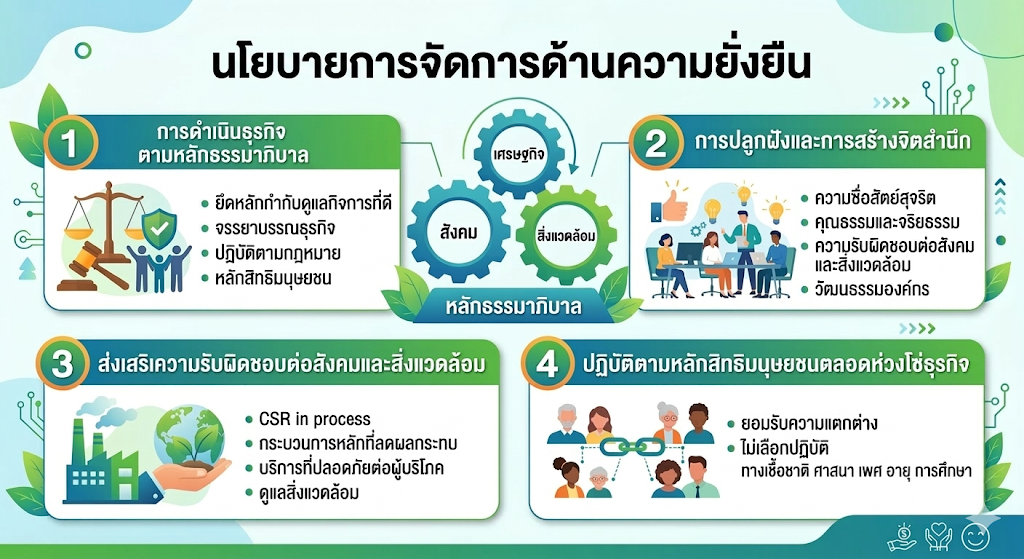
The company conducts its business with an awareness of the importance of sustainable development, aiming to create organizational value across all dimensions: economic, social, and environmental. This is based on operating under good governance principles, instilling and fostering a strong sense of awareness among the company's personnel, taking responsibility for society and the environment, and adhering to human rights principles. To enable the company to operate harmoniously with all stakeholders, the company has established a sustainability management policy and defined guidelines for the organization's sustainable operations, as follows:
1. Business Operations Based on Good Governance. The company adheres to the principles of good corporate governance, maintains business ethics, complies with laws, regulations, and various procedures, including adherence to human rights principles.
2. Instilling and Building Awareness. The company promotes honesty, integrity, morality, and ethics among personnel at all levels, fostering a sense of responsibility towards society and the environment, and cultivating a love for the organization to become part of its corporate culture.
3. Promoting Corporate Social and Environmental Responsibility. The company prioritizes its core processes (CSR in process) in business operations that may impact stakeholders, society, and the environment. The company focuses on providing services that are safe for consumers and the environment.
4. Adherence to Human Rights Principles Throughout the Business Value Chain. The company recognizes individual differences and does not discriminate based on race, religion, gender, age, education, beliefs, or any other factor.
Policy Document Link
https://www.icn.co.th/a/download/file/231-E-03.pdf
Page Number in Report
195
Sustainability Goals & UN SDGs
Has Sustainability Goals
Yes
Goals Description
The company has translated the intentions from its four sustainability management policies into tangible goals that can be measured and tracked, aiming to create balanced growth throughout the value chain of the telecommunication network installation contracting business, as follows:
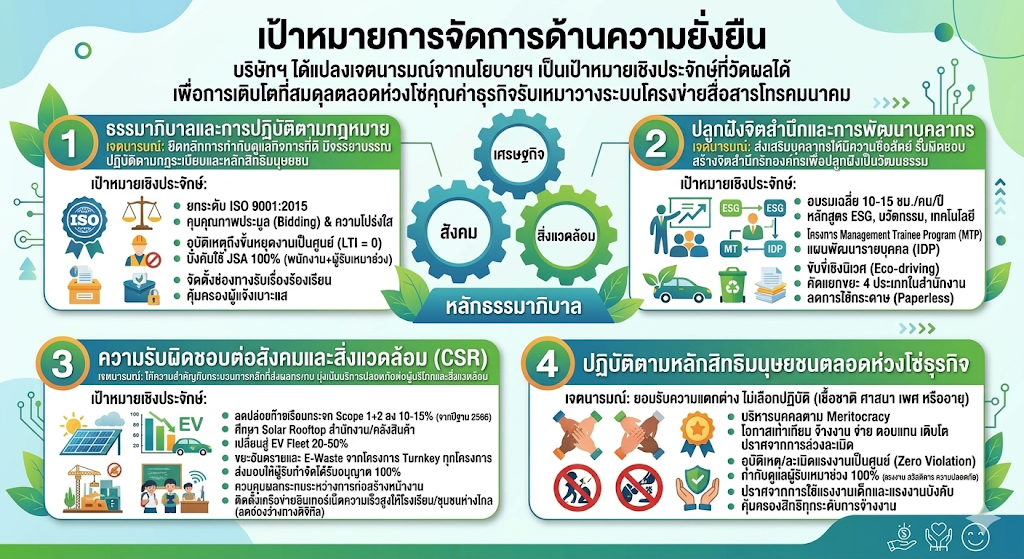
1. Business operations based on good governance and legal compliance.
Intent: Adhere to good corporate governance principles, ethics, and comply with regulations and human rights principles.
Management Goals:
-
Quality and Governance: Elevate standards to the Quality Management System (ISO 9001:2015). To serve as the primary mechanism for controlling the quality of bidding work and ensuring transparency in all stages of the work process.
-
Legal Safety: Strictly comply with safety laws, aiming for zero lost-time incidents (LTI = 0), and enforce 100% Job Safety Analysis (JSA) for both employees and subcontractors.
-
Transparency: Establish an accessible, secure Grievance Mechanism with fair whistleblower protection processes.
2. Fostering and Building Awareness.
Intent: Promote honesty and social and environmental responsibility among personnel, fostering a sense of organizational loyalty to instill it as a culture.
Management Goals:
-
Personnel Development: Increase average training hours to at least 10-15 hours/person/year, incorporating courses on sustainability (ESG), innovation, and advanced technology to foster a sense of collective responsibility in work.
-
Organizational Commitment: Employee satisfaction and engagement survey results of no less than 70-80%, fostering a stable organizational culture through the Management Trainee Program (MTP) and Individual Development Plans (IDP).
-
Environmental Awareness within the Organization: Promote eco-driving behavior, establish a 4-category waste separation system in offices, and drive a paperless campaign to foster environmentally conscious behavior at the individual level.
3. Promoting Corporate Social and Environmental Responsibility (CSR) operations.
Intent: Prioritize core business processes that may impact stakeholders, focusing on services that are safe for consumers and the environment.
Management Goals:
-
Proactive Environmental Management (Environment in Process): Aim to reduce greenhouse gas emissions (Scope 1+2) by 10-15% from the 2023 baseline, study guidelines for installing Solar Rooftops for the company's offices and warehouses, and transition to electric vehicles (EV Fleet) by 20-50%.
-
Waste & E-Waste Management: Mandate that hazardous waste and E-Waste from all Turnkey projects must have a tracking system and be delivered to properly authorized disposal contractors 100%.
-
Responsibility towards Community and Society (Social Impact): Control impacts during on-site construction to prevent severe complaints from communities, and utilize the organization's expertise to install high-speed internet networks for remote schools or communities to reduce the digital divide.
4. Adherence to human rights principles throughout the business value chain.
Intent: Acknowledge individual differences and do not discriminate based on race, religion, gender, or age.
Management Goals:
-
Equal Opportunity & Respect: Focus on human resource management based on meritocracy, providing equal opportunities in employment, compensation, and career advancement for all employees without discrimination, while creating a safe working environment that respects diversity and is free from harassment or intimidation in all forms.
-
Human Rights Auditing & Protection: Absolutely no child labor or forced labor (Zero Violation) at all levels of employment, including overseeing subcontractors to respect human rights and fully comply with labor laws, welfare, and safety regulations 100%.
UN Sustainable Development Goals
| SDG Goal |
|---|
| Goal 3 Good Health and Well-being |
| Goal 3 Good Health and Well-being |
| Goal 4 Quality Education |
| Goal 8 Decent Work and Economic Growth |
| Goal 11 Sustainable Cities and Communities |
| Goal 11 Sustainable Cities and Communities |
| Goal 12 Responsible Consumption and Production |
| Goal 13 Climate Action |
| Goal 13 Climate Action |
| Goal 16 Peace, Justice and Strong Institutions |
Policy Review
Policy Reviewed This Year
Yes
Policy Changed This Year
Yes
Review Details
Over the past year, Information and Communication Networks Public Company Limited (ICN) has reviewed and updated its holistic sustainability policies and goals under the operational structure of the " Sustainability Committee" To identify Materiality Topics by analyzing the needs and responding to the expectations of stakeholders in the business value chain. The key aspects of reviewing goals across all three dimensions are as follows:
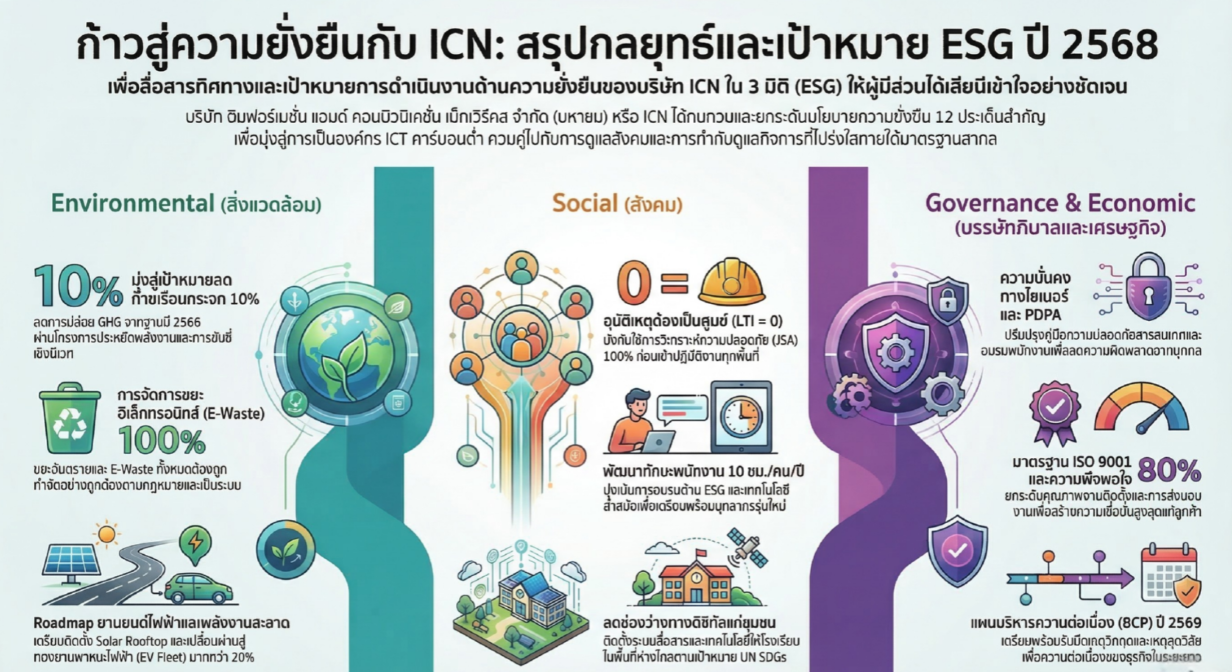
1. Environmental Dimension
The company has reviewed its environmental policy to move towards becoming a low-carbon ICT infrastructure organization and to concretely promote the principles of the Circular Economy.
-
Energy Management and Climate Change: The greenhouse gas (GHG) inventory has been reviewed and certified, using 2023 as the base year data (Scope 1+2 totaling 124.34 tCO2). This led to setting a short-term goal of reducing GHG emissions by at least 10% through energy efficiency projects (LED lighting, Motion Sensors) and Eco Driving, along with a medium-term roadmap for installing Solar Rooftops and transitioning to electric vehicles (EV Fleet ≥ 20%).
-
Waste & E-Waste Management: Actively campaigning for employees to reduce and separate waste at work. Over the past year, the policy for managing electronic waste from various projects has been further strengthened, with the goal that 100% of hazardous waste and e-waste must be delivered to legally authorized disposal contractors. The company has also initiated the creation of a database for all types of waste to prepare for a comprehensive Circular Economy.
2. Social Dimension
The company has reviewed its goals for human resource care, respect for human rights, and co-creation of value with communities to reduce inequality and ensure maximum safety.
-
Occupational Health and Safety: Reviewing proactive safety measures by setting a target of zero Lost Time Injury (LTI=0), and conducting Job Safety Analysis (JSA) and risk assessment before every operational entry. ( JSA 100%) for both employees and subcontractors, and conducts unannounced Surprise Safety Audits.
-
Personnel Development: Adjusting the target for average employee skill development to not less than 10 hours/person/year, incorporating ESG and advanced technology courses, reviewing welfare benefits for security such as the Provident Fund (PVD), and establishing a Management Trainee Program for future leaders.
-
Human Rights: Reviewing the Human Rights Policy, emphasizing the absence of child labor and forced labor at all levels, and planning to initiate a comprehensive Human Rights Due Diligence (HRDD) process.
-
Digital Access for Communities: Reviewing the organization's role in social assistance by leveraging its expertise in telecommunication systems to set goals for installing communication systems, equipment, and/or technologies that provide digital access to remote communities and schools, thereby reducing the digital divide and aligning with UN SDGs.
3. Governance & Economic Dimension
In 2025, the company reviewed its corporate governance policies and goals to enhance transparency, increase competitiveness, and manage risks that could impact business in the digital era, as follows:
-
Good Corporate Governance and Business Ethics: To ensure transparent management and alignment with sustainable growth, the company has reviewed the operations of its board and management, focusing on 3 key areas:
-
Planning for Leadership Succession (Succession Planning): To prepare high-potential personnel, prevent risks from a shortage of key personnel, and ensure business continuity management.
-
Assessment and Identification of Materiality Topics: In 2025, the company enhanced its corporate governance by systematically conducting a Materiality Assessment. The company gathered feedback and expectations from stakeholders across the value chain to assess risks and impacts (Impact) in economic, social, and environmental dimensions, leading to the identification of Materiality Topics. This lays the foundation for the company to define its direction, goals, and success indicators more precisely and concretely.
-
Impact Assessment and Linkage to International Goals (SDG Mapping): In conjunction with identifying Materiality Topics, the company has reviewed its business processes to assess positive impacts and created a table linking the organization's operational goals with the United Nations Sustainable Development Goals (UN SDGs), demonstrating its commitment to being part of global problem-solving.
-
Information Security and Cyber Threats: As operations primarily rely on information technology, the company places the highest importance on cyber risk management. In 2025, significant goals were achieved, including:
-
Information Security Manual Improvement: Updating procedures and preventive measures to be current, compliant with the Personal Data Protection Act (PDPA), and capable of promptly addressing new forms of threats.
-
Cyber Security Training Management: Organized training programs to raise cyber security awareness among employees at all levels, fostering safe usage behaviors and reducing risks arising from human error.
-
Quality Management System and Work Delivery:
-
Elevating quality management system standards to achieve certification from ISO9001:2015 By reviewing the Internal Audit process and Management Review meeting agendas to align with requirements, and having passed external certification audits, which are crucial foundations for building customer confidence and participating effectively in project bidding.
-
The company has reviewed and implemented a customer satisfaction tracking system after project completion to analyze customer feedback or concerns and improve service quality. The target satisfaction score is not less than 80% for all projects, which is crucial for maintaining long-term relationships and strengthening business.
-
-
Anti-Corruption and Supply Chain Management: The company has reviewed its transparency and anti-corruption policies in all forms, increasing the stringency of Supply Chain Management through rigorous evaluation and screening of business partners and subcontractors. This ensures that the company's suppliers conduct business ethically, comply with laws, and align with the organization's ESG practices.
-
Crisis Risk Management: The company recognizes the importance of risk management to support the smooth achievement of its goals as a telecommunication system integrator. In 2025, the company focused on operational risk management while also laying the groundwork to address sustainability risks, as follows:
-
Risk Management in Core Processes: The company utilizes the mechanisms of its Quality Management System (ISO 9001:2015) to identify and assess risks at every critical stage, from bidding risks and subcontractor selection risks to project delivery risks, in order to establish measures to prevent delays and ensure work quality meets standards.
-
ESG Risk Integration: Following the initiation of the Materiality Assessment process in 2025, the company has begun incorporating environmental and social risks directly related to its business, such as occupational health and safety (OHS) risks and compliance risks of business partners, into consideration and setting them as management targets (e.g., LTI = 0 and JSA 100%) to reduce the likelihood of negative impacts.
-
Preparation for Business Continuity Management (Preparation for BCP): To enhance the organization's long-term resilience, over the past year, the management has begun reviewing critical business functions and assessing various challenges to serve as foundational data for preparedness. The company has set a strategic goal to systematically develop a Business Continuity Plan (BCP) to be completed by 2026, in order to prepare for unforeseen circumstances and build maximum confidence among investors and stakeholders.
Impacts on Stakeholders — Overview
Introduction
Information and Communication Networks Public Company Limited ("the Company") recognizes that good corporate governance is a crucial foundation for building trust among all stakeholders and a driving force for sustainable business growth. Driving the organization towards sustainability begins with a strong governance structure and clear assignment of responsibilities from the highest level of the organization. The effective integration of ESG into business strategy stems from having a board structure that directly oversees these issues. Therefore, the Company has established comprehensive governance mechanisms from the policy level to the operational level, as follows:
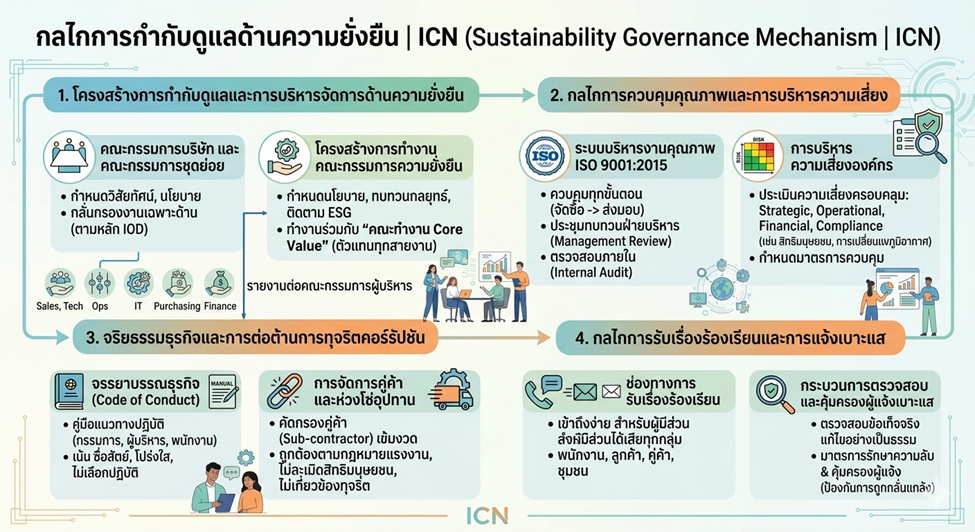
1. Governance Structure and Sustainability Management
-
Board of Directors and Sub-Committees: The Board of Directors plays a crucial role in defining the vision, policies, and strategic objectives. Sub-committees (e.g., Audit Committee, Risk Management Committee) are responsible for scrutinizing and overseeing specific operations in accordance with the principles of good corporate governance set by the Thai Institute of Directors (IOD).
-
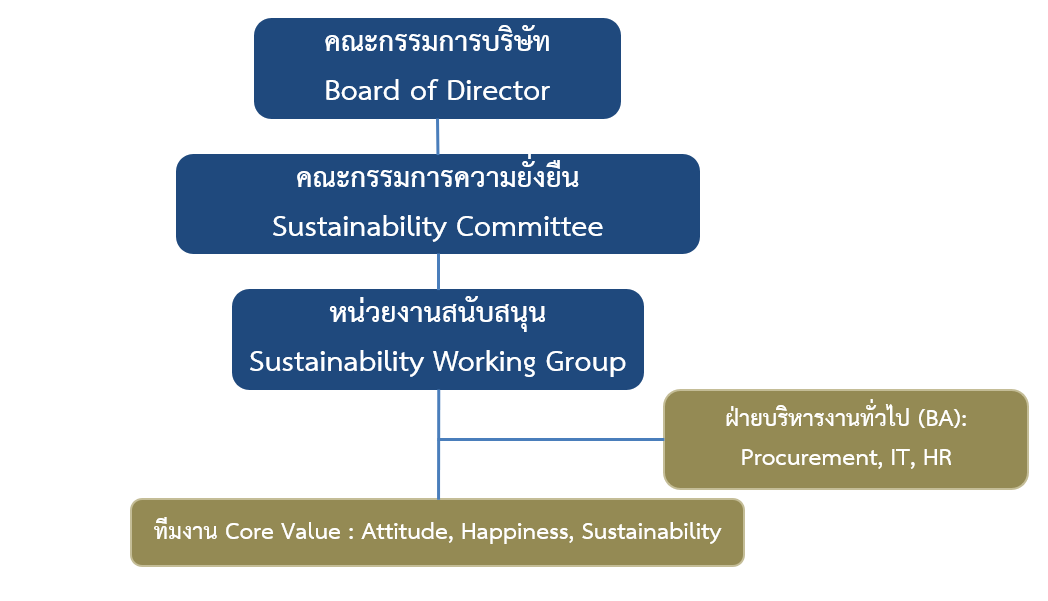
Working Structure, Sustainability Committee: responsible for setting policies, reviewing strategies, and monitoring ESG performance at least once per quarter. This committee will work with the "Core Value Working Group," which comprises representatives from all departments, including Sales, Technology, Operations, IT, Procurement, and Finance, to ensure that strategic policies are concretely implemented at all operational levels. Environmental, social, and governance performance is regularly monitored and reported to the Executive Committee to ensure that business operations are aligned.
2. Quality Control & Risk Management Mechanisms
-
ISO 9001:2015 Quality Management System: The Company adopts international standards as the primary mechanism for controlling all operational processes, from procurement and bidding to project delivery. Management Review meetings and internal audit processes are strictly conducted to maintain standards and prepare for external certification audits.
-
Enterprise Risk Management: Comprehensive risk assessments are conducted, covering strategic risk, operational risk, financial risk, and regulatory risk, such as human rights risks in the supply chain or climate change risks. Control and mitigation measures are systematically established.
3. Business Ethics & Anti-Corruption
-
Business Ethics (Code of Conduct): The Company has developed a business ethics manual to serve as a guideline for all directors, executives, and employees, emphasizing integrity, transparency, and non-discrimination.
-
Supplier and Supply Chain Management: There are strict screening mechanisms for suppliers and sub-contractors. Suppliers must conduct business in compliance with labor laws, not violate human rights, and not be involved in any form of corruption or bribery.
4. Complaint and Whistleblowing Mechanisms
-
Complaint Channels: The Company provides safe and easily accessible channels for all stakeholder groups (including employees, customers, business partners, and communities) to report or complain about illegal acts, corruption, or human rights violations.
-
Whistleblower Investigation and Protection Process: There are established procedures for receiving reports, investigating facts, and resolving issues fairly, with measures for confidentiality and whistleblower protection to prevent harassment or potential adverse impacts.
Business Value Chain
Value Chain Description
Information and Communication Networks Public Company Limited ("the Company") operates as a turnkey and system integrator for telecommunication network systems. The Company has integrated sustainability practices (ESG) into every step of its value chain, from upstream to downstream processes, including various support activities, to deliver maximum value to customers and concretely reduce negative impacts on the environment and society. These activities are divided into two categories: Core Activities and Support Activities, with details as follows:
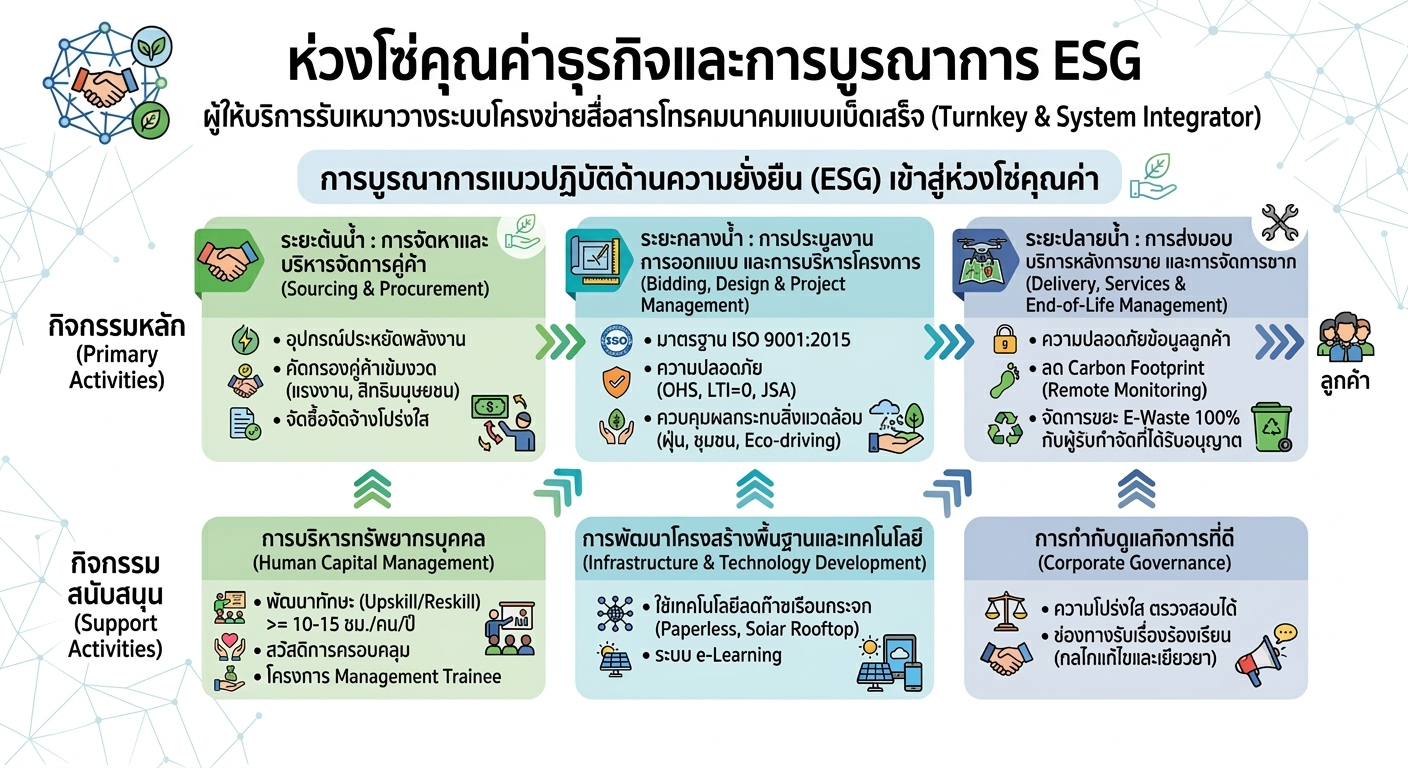
Core Activities are divided into 3 phases:
Upstream Phase: Sourcing & Procurement
-
Business Nature: Procurement of telecommunication equipment, technology, and software from manufacturers or distributors both domestically and internationally.
-
Sustainability Integration:
-
Selection of energy-efficient equipment with environmental standards.
-
Strict screening process for partners and sub-contractors, requiring compliance with labor laws, respect for human rights, absolute prohibition of child labor and forced labor, and no involvement in corruption.
-
Transparent and fair procurement, and prevention of corruption in the supply chain.
-
Midstream Phase: Bidding, Design & Project Management
-
Business Nature: Participation in government and private sector project bidding, network engineering system design, and on-site construction or turnkey system installation.
-
Sustainability Integration:
-
Controlling work quality at every step according to ISO 9001:2015 standards.
-
Occupational Health & Safety standards for both ICN employees and sub-contractors.
-
Enforcing the highest safety measures with a target of zero Lost Time Incidents (LTI = 0), conducting JSA assessments, and 100% verification of PPE readiness before entering work areas.
-
Controlling on-site environmental impacts, such as dust management, reducing community impact (Zero Significant Complaint), and promoting Eco-driving in project vehicle usage.
-
Downstream Phase: Delivery, After-Sales Services & End-of-Life Management
-
Business Nature: Delivery of complete networks, system maintenance, and technical services to customers.
-
Sustainability Integration:
-
Ensuring customer data security and maximizing satisfaction.
-
Managing service team travel to reduce Carbon Footprint (e.g., using Remote Monitoring systems instead of on-site visits).
-
Management of waste and residual materials from equipment installation at project sites.
-
100% delivery of hazardous waste and E-Waste to authorized disposal contractors.
-
Support Activities
-
Human Capital Management
-
Promoting skill development (Upskill/Reskill) for at least 10-15 hours/person/year through annual individual development plans.
-
Treating employees equally, promoting comprehensive welfare in all aspects including health, economy, and society, and implementing the Management Trainee Program (MTP) to continuously develop new leaders.
-
-
Infrastructure & Technology Development
-
Utilizing technology to reduce greenhouse gas emissions (Scope 1 and 2), such as developing an internal e-Learning system, reducing paper usage (Paperless), and planning for future solar rooftop installations at offices to reduce energy consumption.
-
-
Corporate Governance
-
Operating with transparency and accountability, providing complaint mechanisms for employees, partners, and communities to facilitate fair resolution and remedy processes.
Stakeholder Analysis
Introduction
The Company recognizes that operating a comprehensive telecommunications and information technology network system integration and turnkey business to achieve stable and sustainable growth cannot be separated from creating shared value with all stakeholders. Amidst the challenges and changes in the ICT industry, the Company places paramount importance on fostering engagement, listening to opinions, and thoroughly understanding the expectations of both internal and external stakeholders.
The Company has integrated the stakeholder engagement process into its business value chain, from upstream to midstream and downstream processes. It continuously provides diverse, transparent, and appropriate communication channels for each stakeholder group. The information, suggestions, and concerns received are analyzed, risk-assessed, and prioritized to guide the direction, review policies, and set goals for managing key sustainability issues (Materiality Topics) that can truly meet the needs and create balance for all parties.
Over the past year, the Company has reviewed and categorized key stakeholders throughout the value chain to ensure that its operational processes do not create negative impacts and can deliver tangible positive impacts across economic, social, and environmental dimensions. Details regarding the assessment of expectations, engagement approaches, and responses to each stakeholder group are summarized in the Stakeholder and Expectation Analysis Table, which illustrates key stakeholder groups, communication channels, and issues of importance to each group. This information has been analyzed in conjunction with business risks and opportunities to further define the organization's material sustainability issues.
Stakeholder Analysis
| Stakeholder Type | Stakeholders | Stakeholder Expectations | Response to Expectations | Communication Activities |
|---|---|---|---|---|
| Internal stakeholders | 2913 · Description: Shareholders | 1. The company's operating results have shown continuous and significant growth. 2. Generating consistent profits, along with continuous dividend payments to shareholders in accordance with the established policy. 3. Good corporate governance, adhering to transparency and accountability in operations, with accurate, complete, and timely disclosure of information to ensure all stakeholders receive sufficient information for decision-making. 4. Continuous development and improvement of corporate governance processes to comply with international standards and be internationally recognized. | 1. The company conducts its business with a commitment to integrity, transparency, and in accordance with good corporate governance principles, is socially responsible, and adheres to professional ethics. 2. The company has clearly defined business directions, with measurable goals and strategies, regularly monitors and evaluates operational performance, and is prepared to continuously improve and develop its business. 3. The company prioritizes building and maintaining good relationships with all stakeholders, has diverse and open communication channels, actively listens to feedback and suggestions from stakeholders, and is prepared to respond to issues and concerns promptly and effectively. | 2938 · Description: Visit · 2941 · Description: Online Communication · 2942 · Description: Internal Meeting · 2944 · Description: Annual General Meeting (AGM) · 2945 · Description: Complaint Reception · 2946 · Description: Employee Engagement Survey · 2947 · Description: Satisfaction Survey · 2948 · Description: Training / Seminar · 2949 · Other name: Annual Report, Opportunity Day, Analyst Meeting · Description: Others |
| External stakeholders | 2923 · Description: Customers | 1. Continuous care and support after purchasing products or services, including problem resolution, consultation, and product warranty. 2. Desire for high-quality products and services that meet requirements and are priced appropriately for their quality. 3. Receipt of products and services exactly as ordered and within the specified timeframe. 4. New technologies and innovations that facilitate and enhance the efficiency of using products and services. 5. Personal data is appropriately managed and protected. 6. Desire for a trustworthy, honest, and responsible company. | 1. Excellent After-Sales Service: - Create an accessible customer service system with multiple contact channels such as telephone, email, and chat, staffed by personnel ready to provide prompt and efficient assistance. - Provide clear and comprehensive information regarding products/services, warranty conditions, and problem-resolution procedures. - Resolve issues promptly and fairly, expediting solutions as quickly as possible, and prioritizing customer satisfaction. - Follow up on problem resolution to ensure issues are correctly addressed and customers are satisfied with the outcome. 2. Quality and Value: - Strictly control product/service quality at every stage to ensure that products/services meet specified standards. - Offer products/services that precisely meet customer needs by thoroughly studying and understanding customer requirements to provide targeted solutions. - Set appropriate and fair prices by considering costs, quality, and customer satisfaction to establish reasonable and competitive pricing. 3. Accuracy and Timeliness: - Efficiently manage procurement to ensure customers receive the correct products/services as ordered. - Deliver products/services on time as agreed with the customer. - Regularly inform customers of delivery progress to build confidence and reduce concerns. 4. Technology and Innovation: - Introduce modern technologies, innovations, and solutions. - Continuously develop services by offering new technologies and innovations that facilitate convenience and enhance operational efficiency. 5. Privacy: - Keep customer personal information confidential and not disclose or use it inappropriately. - Comply with laws and regulations related to data privacy. 6. Reliability: - Conduct business with honesty, transparency, and responsibility. - Build strong customer relationships by showing respect, listening, and genuinely responding to customer needs. - Uphold commitments made to customers. | 2938 · Description: Visit · 2941 · Description: Online Communication · 2942 · Description: Internal Meeting · 2944 · Description: Annual General Meeting (AGM) · 2945 · Description: Complaint Reception · 2947 · Description: Satisfaction Survey |
Environmental Sustainability — Overview
Introduction
Information and Communication Networks Public Company Limited ("the Company") recognizes the importance of controlling and managing resources for sustainable development. The Company is fully aware that achieving success requires cooperation from personnel at all levels to create a balance between economic growth, enhancing quality of life, and environmental preservation. To serve as a clear operational framework consistent with the organization's mission, the Board of Directors (at its 5/2567 meeting on November 7, 2567) therefore resolved to officially approve the announcement of the "Environmental Care and Preservation Policy". This policy will serve as a foundation for driving the Company's environmental operations in 2568 and subsequent years, with the following key details:
Environmental Policy & Guidelines
Introduction
Environmental Policy:
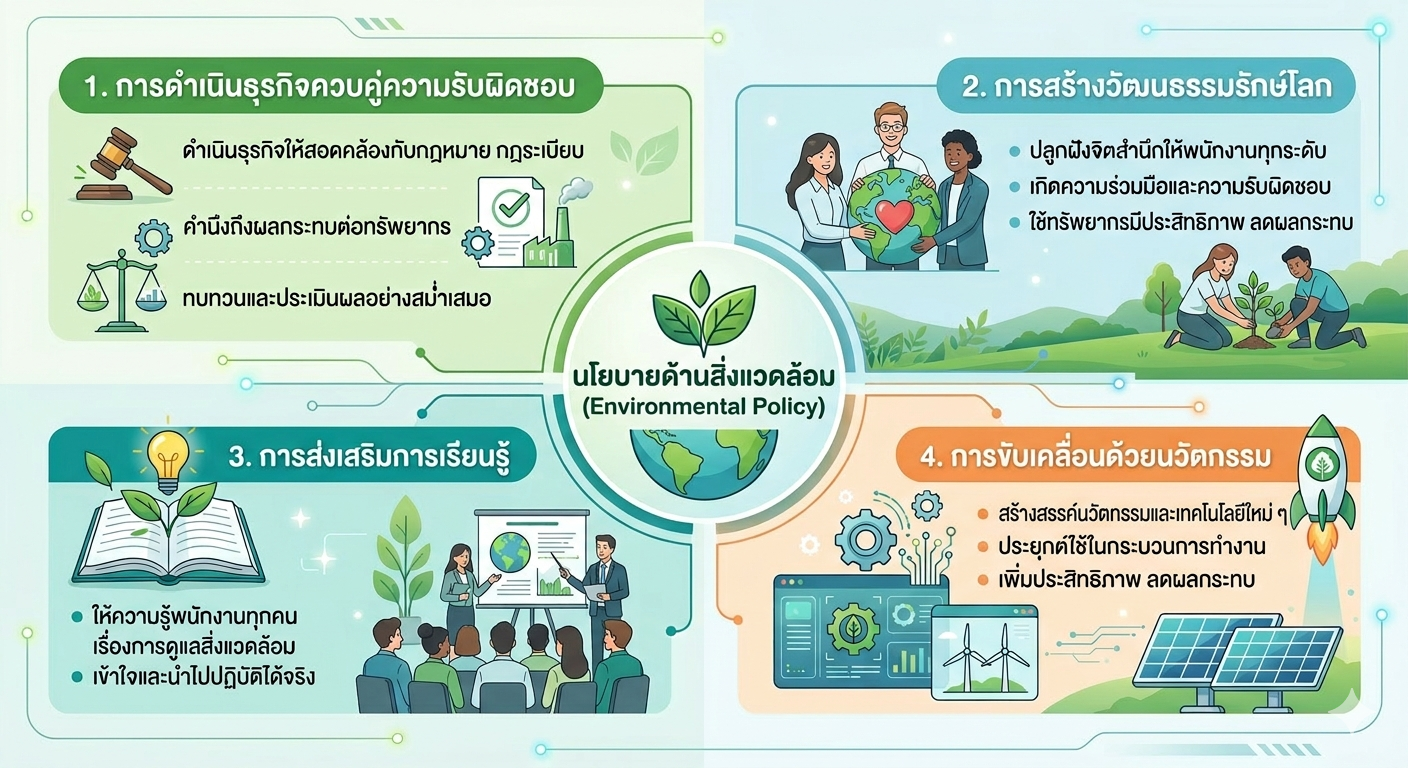
The company sets the direction for environmental conservation through four main policies:
-
Conducting Business with Responsibility: Conducting business in strict compliance with environmental laws, regulations, and policies, considering the impact on natural resources and the environment, and regularly reviewing and evaluating operational performance.
-
Fostering an Earth-Loving Culture: Building an organizational culture and instilling awareness among employees at all levels to foster cooperation and responsibility in environmental management, ensuring efficient resource utilization and minimizing negative impacts.
-
Promoting Learning: Focusing on promoting and educating all employees on environmental care to foster understanding and enable practical implementation.
-
Driven by Innovation: Promoting the creation of new innovations and technologies that can be applied in work processes to increase efficiency and reduce environmental impact.
Environmental Guidelines in Practice:
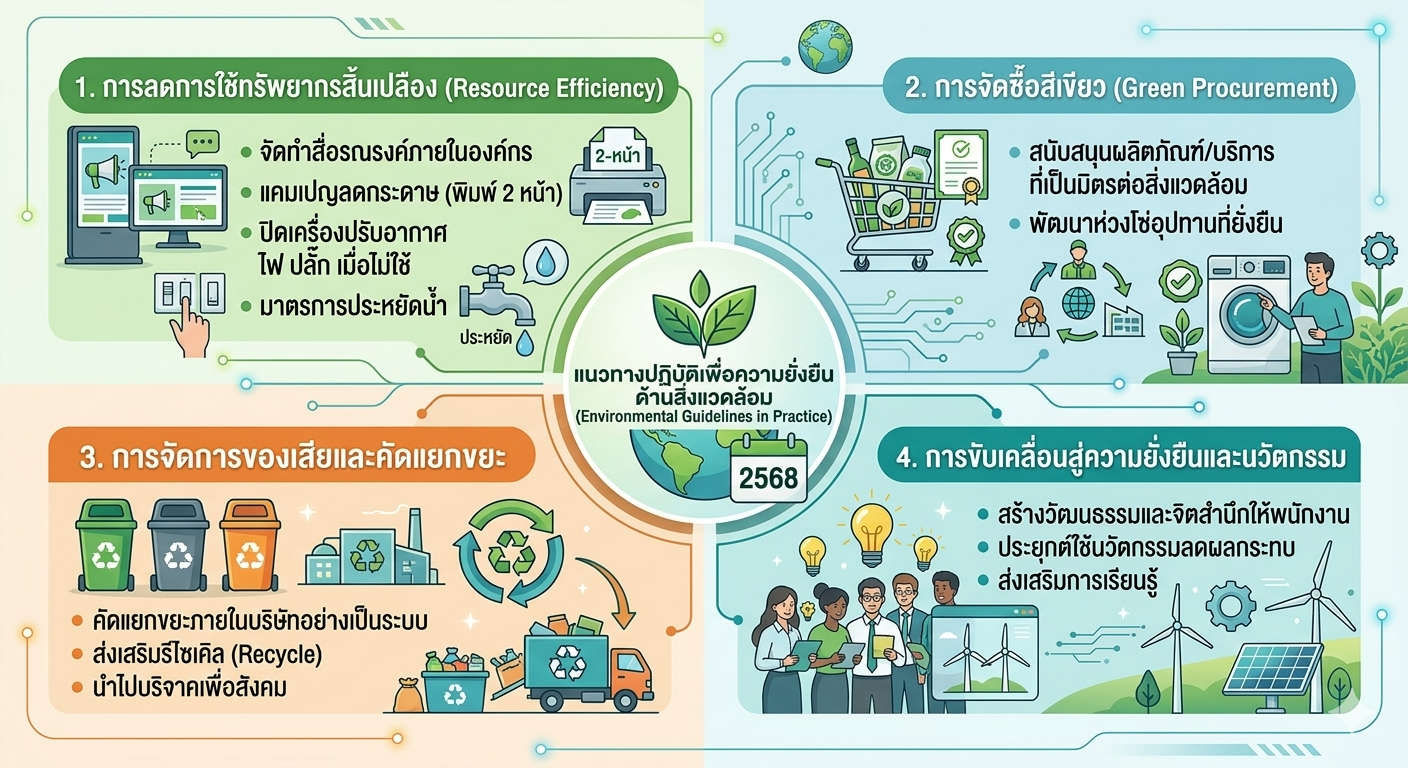
To concretely achieve the policy's objectives, in 2025, the company has translated the policy into practical guidelines covering internal organizational activities as follows:
-
Resource Efficiency: Developing public relations materials and internal campaigns to concretely reduce resource consumption, such as a paper reduction campaign promoting double-sided printing, electricity reduction measures by mandating the shutdown of air conditioners, lights, and power outlets during lunch breaks or when not in use, as well as water conservation measures.
-
Green Procurement: Supporting and prioritizing the procurement of environmentally friendly products, equipment, or services as part of supporting a sustainable supply chain.
-
Waste Management and Segregation: Systematically segregating waste generated within the company to ensure proper and efficient subsequent waste management processes, promoting waste separation for recycling or donation to benefit society.
-
Driving Towards Sustainability and Innovation: Fostering a culture and awareness among employees, promoting creativity and learning new innovations and technologies that can be applied in work processes to increase efficiency and reduce environmental impact.
Has an Environmental Policy
Yes
Policy Description
The company recognizes the importance of controlling resource utilization for sustainable development, which requires the cooperation of everyone in the organization. By instilling values that make employees aware that societal progress necessitates balanced development across economic aspects, quality of life, and the stewardship of natural resources and the environment, the company aligns with its mission by establishing the following policies and guidelines:
-
Conduct business in compliance with environmental laws, regulations, and policies, considering the impact on natural resources and the environment. Operations are regularly reviewed and evaluated.
-
Foster an organizational culture and raise awareness among employees at all levels, promoting cooperation and responsibility in environmental management to ensure efficient resource utilization and reduce environmental impact.
-
Promote environmental knowledge among all employees.
-
Promote the creation of innovations that can be applied to work processes.
Guidelines
-
Reduce the consumption of non-renewable resources. Public relations campaigns have been organized to promote resource reduction, such as encouraging the use of both sides of paper to decrease paper volume, reducing energy consumption by switching off air conditioners during lunch breaks, turning off lights and unused power outlets, and reducing water usage.
-
Support the procurement of environmentally friendly products.
-
Waste disposal: Segregate waste generated within the company for proper recycling processes. This involves separating waste to facilitate subsequent waste management and sorting operations, or for donation.
-
Implement IT systems in work processes to reduce paper consumption. The company is committed to continuous development to become a sustainably efficient organization.
Policy Document Link
https://www.icn.co.th/a/download/file/231-E-19.pdf
Page Number in Report
195
Environmental Guidelines
| Guideline |
|---|
| Electricity Management |
| Fuel Management |
| Water Management |
| Waste Management |
| Greenhouse Gas and Climate Change Management |
Environmental Policy Review
Policy Reviewed This Year
Yes
Review Details
In the past year 2025, Information and Communication Networks Public Company Limited ("the Company") concretely reviewed and elevated its environmental operations by implementing "Environmental Care and Conservation Policy" which was approved by the Board of Directors at the end of 2024, serves as the fundamental framework and is integrated with the results of the Materiality Assessment, initiated for the first time in 2025, to translate policy intentions into measurable strategic goals. The key aspects of the review and new goal setting are as follows:
-
From resource reduction practices to systematic greenhouse gas reduction targets.
-
Review of previous practices:
-
Goals and upgrades in 2025: The Company has reviewed and upgraded its energy management to align with international standards by systematically initiating a Greenhouse Gas (GHG) Inventory, using 2023 data as the baseline year (Scope 1 and 2 totaling 124.34 tCO2e). This has led to the setting of a short-term target to reduce GHG emissions by no less than 10%, along with a medium-term roadmap for piloting the installation of solar rooftop systems and transitioning to electric vehicles (EV Fleet). This represents a true elevation from general energy saving to comprehensive Climate Change Management.
-
-
Expanding the scope of waste management to Electronic Waste (E-Waste) Tracking.
-
Review of previous practices: Previously, waste segregation was mandated within the office to facilitate recycling and donation.
-
Goals and upgrades in 2025: To cover the impacts from the core processes of the telecommunications system integration (Turnkey & System Integrator) business, the Company has reviewed its targets by expanding the scope from general waste management (Landfill) to include measures for controlling electronic waste (E-Waste) from all project sites. A strict target has been set that 100% of hazardous waste and e-waste must be properly delivered to legally authorized disposal contractors.
-
-
Elevating Green Procurement of environmentally friendly products.
-
Review of previous practices: The original policy broadly stated "support" for the procurement of environmentally friendly products.
-
Goals and upgrades in 2025: The Company has reviewed these practices and established clearer Key Performance Indicators (KPIs), setting a Green Procurement target focused on sourcing equipment or products containing recycled materials for office supplies, thereby stimulating the supply chain to participate in environmental care alongside the Company.
-
-
Application of IoT innovation to enhance energy management efficiency within buildings.
-
Review of previous practices: From the original policy that focused on campaigning for employees to adopt energy-saving behaviors by collectively turning off air conditioners, lights, and power outlets during lunch breaks or when not in use.
-
Goals and upgrades in 2025: The Company has elevated its energy management to be more intelligent and reduce reliance on individual behavior (Human Error) by applying Internet of Things (IoT) technology in line with the organization's commitment to promoting innovation. Examples include installing motion sensors in common areas and meeting rooms to automatically control lighting and air conditioning systems, turning them off when no users are present. The integration of such innovations not only enhances energy efficiency in the office but also serves as a crucial mechanism enabling the Company to precisely and concretely control and reduce indirect greenhouse gas emissions from electricity consumption (Scope 2).
-
Policies & Guidelines Changed
| Change |
|---|
| Electricity Management |
| Fuel Management |
| Waste Management |
Energy Management — Overview
Introduction
Information and Communication Networks Public Company Limited ("the Company") recognizes the importance of efficient energy resource utilization to mitigate the impact of climate change and control operational costs. In 2025, the Company has elevated its energy management to be more systematic and measurable, covering both electricity consumption within office buildings and fuel consumption in operational processes and project management (Turnkey Project).
Energy — Plan & Guidelines
Has an Energy Management Plan
Yes
Plan Description
The company has established a proactive energy management plan, dividing its operations into two main parts to align with the nature of its telecommunications system installation contracting business, as follows:
-
Electricity Management Plan within Buildings (Electricity Management Plan):
-
Application of Smart Innovation (Smart Office IoT): Install motion sensor systems in common areas and meeting rooms to automatically control lighting and air conditioning, thereby reducing energy loss from systems being left on when not in use (Human Error).
-
Equipment Efficiency: Gradually replace existing office lighting with energy-saving LED bulbs and establish regular maintenance standards for air conditioning systems to ensure optimal performance and reduced electricity consumption.
-
Building Awareness (Energy Saving Awareness): Campaign and foster an organizational culture for employees to continuously participate in energy conservation, in accordance with the environmental care and preservation policy announced by the company's Board of Directors.
-
-
Fuel and Oil Management Plan in Operational Processes (Fuel Management Plan):
-
Fleet & Route Optimization: Plan the travel routes for engineering and technical teams for project site visits to be the shortest and most cost-effective, and utilize remote conferencing technology (Online Meeting) to reduce the necessity of travel.
-
Eco-Driving Campaign (Eco-Driving): Provide knowledge to drivers and project engineers regarding fuel-efficient driving behaviors, such as anti-idling practices and maintaining speed within specified limits.
-
Preventive Vehicle Maintenance (Preventive Maintenance): Implement strict measures for periodic inspection of engine conditions and tire pressure for all company vehicles, to ensure complete fuel combustion and reduce emissions.
-
Energy — Electricity Consumption
Electricity Consumption
| Metric | Current Year | Previous Year | Two Years Ago |
|---|---|---|---|
| Total electricity consumption within the organization (Kilowatt-Hours) | 101,701.86 | 119,255.96 | 117,966.9 |
| Electricity purchased for consumption from non-renewable energy sources (Kilowatt-Hours) | 101,701.86 | 119,255.96 | 117,966.9 |
| Electricity purchased or generated for consumption from renewable energy sources (Kilowatt-Hours) | 0 | 0 | 0 |
Energy — Fuel Consumption
Fuel Consumption
| Metric | Current Year | Previous Year | Two Years Ago |
|---|---|---|---|
| Crude oil (Barrels) | |||
| Coal (Metric tonnes) | |||
| Jet fuel (Litres) | |||
| Diesel (Litres) | 13,138.64 | 12,333.62 | 14,972.91 |
| Gasoline (Litres) | 8,440.36 | 9,256.4 | 10,809.63 |
| Fuel oil (Litres) | |||
| Natural gas (Standard cubic feet) | |||
| LPG (Kilograms) | |||
| Steam (Metric tonnes) |
Energy — Targets
Introduction
To drive the energy management plan to success, the company has set quantitative and qualitative targets based on greenhouse gas emission data from the base year 2023 (GHG Scope 1 and 2 totaling 124.34 tCO2e) to serve as a framework for performance evaluation, as follows:
Short-term goals (2024 – 2026):
-
Overall goals: Reduce total energy consumption and greenhouse gas emissions (Scope 1 and 2) by no less than 10% compared to the base year 2023.
-
Electricity goals: Continuously control and reduce electricity consumption in offices through IoT systems and LED lighting.
-
All electricity consumption data must be calculated and compiled into verifiable greenhouse gas accounts.
-
-
Fuel goals: 100% of the company's central and operational vehicles must undergo scheduled maintenance.
-
Reduce fuel consumption rate through the Eco-Driving campaign
-
Medium-term and long-term goals (2027 – 2029 and from 2030 onwards):
-
Electricity goals (Renewable energy): Study the feasibility and prepare an implementation plan for installing rooftop solar power generation systems (Solar Rooftop) for offices and warehouses to increase the proportion of clean energy consumption within the organization.
-
Fuel goals (Electric Vehicles): Aim to transition the company's central vehicle fleet to electric vehicles (EV Fleet) within Proportion of 20% to 50% of the total number of vehicles to significantly reduce fuel consumption (Scope 1) and support the long-term goal of achieving Net Zero greenhouse gas emissions.
Has Set Targets
No
Energy — Performance & Outcomes
Introduction
Performance and Results
-
Electricity Operations and Results: In 2025, the company effectively managed electricity consumption through an internal energy-saving campaign, resulting in the company's total electricity consumption being better than The established goals reflect the concrete cooperation of employees in behavioral change.
-
Fuel Operations and Results: In 2025, the company's administrative department, responsible for vehicles, ensured that all company vehicles underwent scheduled inspections 100%, helping to keep vehicles in ready-to-use condition and fuel-efficient. This year, the company's total fuel consumption (gasoline and diesel) was 21,579 liters, which the company effectively controlled the disbursement of fuel for all projects to be in line with the estimated budget and operational plan.
Has Performance Results
Yes
Performance Description
The company recognizes the importance of efficient energy management, focusing on reducing electricity and water consumption, which are crucial resources for business operations, coupled with sustainable environmental conservation. To enable all employees to participate in driving this goal, the company has continuously campaigned and instilled awareness regarding energy saving through the "5 P" measures and by disseminating electricity consumption data for each office area in easy-to-understand graphs and figures. This serves as a mirror reflecting the energy consumption behavior of all of us.
Furthermore, from the analysis of electricity consumption data for the year 2025, it was found that the company's electricity consumption decreased compared to the year 2024. The main factors contributing to this were higher temperatures and the expansion of operational activities within the organization. Nevertheless, the company remains committed to intensifying its energy-saving measures to reduce environmental impact and sustainably control energy costs. Specifically, continuous dissemination of electricity consumption data for each office floor aims to inform employees and enable them to compare monthly electricity usage, as well as the overall average electricity consumption of the office. This will concretely raise awareness of energy consumption and related costs.
The company believes that transparent and continuous dissemination of information will stimulate all employees to become aware of the importance of energy saving and collectively adjust their daily energy consumption behaviors, both at work and at home, to truly foster an environmentally conscious organizational culture and collectively build a sustainable future for everyone.
Water — Plan & Guidelines
Introduction
Information and Communication Networks Public Company Limited ("the Company") recognizes the importance of valuable water resource utilization. Although the nature of the Company's business as a telecommunications system contractor does not involve production processes that require water, and operates within the context of leasing office building space for its operations, all water consumption is limited solely to the basic domestic use by employees within the building.
However, under its environmental care and conservation policy, the Company has established guidelines for water management within the scope of its operational control, focusing on encouraging personnel to use water sparingly, along with close coordination with the juristic person or building management to inspect plumbing systems and sanitary fixtures within the leased premises to ensure there are no leaks.
Has a Water Management Plan
No
Water — Withdrawal, Discharge & Consumption
Water Withdrawal, Discharge & Consumption
| Metric |
|---|
| Total water withdrawal (Cubic meters) |
| Total water withdrawal by third-party water (Cubic meters) |
| Total water withdrawal by surface water (Cubic meters) |
| Total water withdrawal by groundwater (Cubic meters) |
| Total water withdrawal by seawater (Cubic meters) |
| Total water withdrawal by produced water (Cubic meters) |
| Percentage of wastewater treated before discharge (%) |
| Total water discharge (Cubic meters) |
| Total water discharge to third-party water (Cubic meters) |
| Total water discharge to surface water (Cubic meters) |
| Total water discharge to groundwater (Cubic meters) |
| Total water discharge to seawater (Cubic meters) |
| Total water consumption (Cubic meters) |
| Recycled water (Cubic meters) |
Water — Targets
Introduction
Water Management Goals (Water Management Targets)
To ensure water management aligns with the context of office building tenancy, the Company has established goals focused on employee participation, as follows:
-
Quantitative Goals: Control the average per capita tap water consumption (Water Intensity) to prevent a significant increase compared to the baseline year, or aim to reduce the water consumption rate. 2-5 percent
-
Qualitative Goals: Instill awareness and foster responsible water usage habits among 100% of employees through internal office campaigns.
-
Immediately report maintenance issues to the building management (Zero Delay Reporting) upon detecting abnormalities or leaks from faucets and sanitary fixtures within the company's premises, to minimize the wasteful loss of water resources.
-
Has Set Targets
No
Water — Performance & Outcomes
Introduction
Operational Performance and Results in Water Management (Performance and Results)
The company has implemented water management initiatives within the leased office premises, with the following operational results:
-
Communication and Awareness Building (Awareness & Communication): Developed proactive communication materials (Signage & Internal Communication) installed in areas with water usage, such as restrooms and common areas (Relax Zone), to encourage employees to conserve water, turn off faucets completely after use, and prompt employees to report any malfunctions.
-
Maintenance Coordination (Proactive Maintenance Coordination): The Administration and Facilities Department has regularly conducted inspections of common areas and restrooms to ensure orderliness. Over the past year, the company has coordinated with building management to promptly repair damaged equipment, which has prevented prolonged water loss due to leaks.
Has Performance Results
No
Waste Management — Overview
Introduction
Information and Communication Networks Public Company Limited ("the Company") operates as a contractor for telecommunication network system integration (System Integrator), primarily undertaking bidding projects and turnkey contracts for large government and private sector entities. In the context of such business operations, decommissioned electronic equipment or old network devices (Decommissioned Equipment) must be strictly returned to the project owner in accordance with the contractual terms (Terms of Reference: TOR). Consequently, the volume of electronic waste (E-Waste) remaining for the Company's disposal process is very small or almost non-existent.
Nevertheless, the Company continues to prioritize waste management in accordance with the principles of the circular economy (Circular Economy). In 2025, the Company established a concrete waste management system, encompassing both general waste within the leased office premises and the small amount of electronic waste generated from internal operations (e.g., deteriorated office IT equipment or residual materials from installations). This is to ensure that all types of waste are managed correctly according to academic principles and do not adversely affect the environment.
Waste — Plan & Guidelines
Has a Waste Management Plan
Yes
Plan Description
Waste and Disposal Management Plan (Waste Management Plan)
In 2025, the company initiated a waste management plan aligned with its business nature, as follows:
-
E-Waste Management Plan in the Value Chain (Value Chain E-Waste Management): Establishing measures for the safe dismantling and storage of equipment remnants at the site to prevent the leakage of hazardous chemicals into the environment, and implementing a stringent, auditable documentation system for returning equipment remnants to project owners.
-
Internal E-Waste Disposal Plan (Internal E-Waste Handling): Initiating the collection of e-waste generated within the office (e.g., obsolete computers, batteries) by establishing criteria for selecting registered and licensed disposal contractors from the Department of Industrial Works to ensure proper disposal.
-
General Waste Management Plan within the Office (Office Waste Management): Waste sorting points have been established within the office, categorized into general waste, recyclable waste, and wet waste, along with campaigns encouraging employees to sort waste at the source to collect recyclable waste for handover to the building management or donation to social organizations.
Waste — Generation, Disposal & Recycling
Waste Generation, Disposal & Recycling
| Metric | Current Year | Previous Year | Two Years Ago |
|---|---|---|---|
| Total waste generated (Kilograms) | 4,386 | 4,946 | 5,022 |
| Non-hazardous waste (Kilograms) | 4,356 | 4,914 | 4,992 |
| Non-hazardous waste - Landfilling (Kilograms) | |||
| Non-hazardous waste - Incineration (with energy recovery) (Kilograms) | |||
| Non-hazardous waste - Incineration (without energy recovery) (Kilograms) | |||
| Non-hazardous waste - Other disposal operations (Kilograms) | |||
| Hazardous waste (Kilograms) | 30 | 32 | 30 |
| Hazardous waste - Landfilling (Kilograms) | |||
| Hazardous waste - Incineration (with energy recovery) (Kilograms) | |||
| Hazardous waste - Incineration (without energy recovery) (Kilograms) | |||
| Hazardous waste - Other disposal operations (Kilograms) | 30 | 32 | 30 |
| Total reused/recycled waste (Kilograms) | 249.57 | 515.5 | 397.5 |
| Reused/Recycled non-hazardous waste (Kilograms) | 249.57 | 515.5 | 397.5 |
| Reused non-hazardous waste (Kilograms) | 152.77 | 441 | 323 |
| Recycled non-hazardous waste (Kilograms) | 96.8 | 74.5 | 74.5 |
| Reused/Recycled hazardous waste (Kilograms) | |||
| Reused hazardous waste (Kilograms) | |||
| Recycled hazardous waste (Kilograms) |
Waste — Targets
Introduction
Waste Management Targets
As a starting point for driving waste management, the Company has set the following short-term targets:
-
Traceability Target: 100% of dismantled equipment from auction projects must have complete documentation of return to the project owner.
-
Internal E-Waste Targets: Initiate the creation of a database (Baseline Data) for the volume of electronic waste within the office, and aim for 100% of the organization's E-Waste not to be mixed with general waste (Zero Illegal Dumping) and to be disposed of properly.
-
Office Waste Targets: 100% of employees are aware of and participate in the office waste segregation campaign to reduce the amount of waste sent to landfills.
Has Set Targets
No
Waste — Performance & Outcomes
Has Performance Results
Yes
Performance Description
Waste and Debris Management Performance and Results (Performance and Results)
In 2025, the first year of officially initiating the electronic waste management system, the company's performance is as follows:
-
Success in E-Waste Management with Clients: The company successfully completed the dismantling and return of electronic equipment remnants to the project owners, in full compliance with the Terms of Reference (TOR) for 100% of all projects delivered in 2025, with no accidents or environmental impact complaints arising from on-site equipment remnant management.
-
Internal Waste Segregation and Collection Initiative: The company has proportionally allocated space for collecting electronic waste within the office (e.g., batteries, damaged IT equipment). Currently, data is being collected to establish a baseline, and a qualified disposal company is being selected to proceed with disposal in the next fiscal year.
-
Recycling Waste Segregation in the Office: Following an internal campaign, employees have concretely cooperated in segregating plastic and paper waste. The company has successfully collected and delivered recyclable waste for beneficial use, totaling 96.8 kilograms, and jointly utilized both sides of paper totaling 152.77 kilograms.
Greenhouse Gas — Overview
Introduction
Information and Communication Networks Public Company Limited ("the Company") recognizes the urgency of climate change, which is a critical global agenda. Although the Company operates as a telecommunication network system integrator, which is not a high-emission industry compared to large-scale manufacturing sectors, the Company is committed to demonstrating responsibility and contributing to mitigating this issue.
The Company has established a policy to become a Low-Carbon ICT Infrastructure Leader by systematically preparing and assessing its Carbon Footprint for Organization (CFO). Using 2023 data as the base year, the total Scope 1 and Scope 2 greenhouse gas emissions were 122.81 tons of carbon dioxide equivalent (tCO2e). This data will serve as a reference point for setting measurable and concrete plans and targets for greenhouse gas emission reduction.
GHG — Plan & Guidelines
Has a GHG Management Plan
Yes
Plan Description
Greenhouse Gas Management Plan (GHG Management Plan)
The company has established a comprehensive greenhouse gas management plan covering the organization's main emission sources, categorizing operations into three scopes as follows:
-
Greenhouse Gas Management Scope 1 (Scope 1 - Direct Emissions): Focuses on managing fuel consumption of central vehicles and project operational vehicles, which are primary emission sources. This includes plans for an Eco-Driving campaign, periodic engine maintenance to enhance combustion efficiency, and a future transition plan to an Electric Vehicle (EV) fleet.
-
Greenhouse Gas Management Scope 2 (Scope 2 - Indirect Emissions): Focuses on reducing electricity consumption within leased office buildings. This includes plans to apply IoT innovations (e.g., Motion Sensors) for automatic control of lighting and air conditioning systems, converting all light bulbs to 100% LED, and a plan to study the feasibility of accessing renewable energy in a form suitable for the company's context.
-
Preparation for Scope 3 (Scope 3 - Value Chain Emissions): The company plans to begin collecting data on other indirect greenhouse gas emissions occurring in the value chain, such as employee travel, electronic waste (E-Waste) management, and promoting a Green Procurement policy to support environmentally conscious partners.
GHG — Emissions
Introduction
Verification of the company's greenhouse gas emissions over the past year.
Internal Greenhouse Gas Data Governance and Review:
to ensure that the disclosure of environmental and climate change data is transparent and reliable. The company prioritizes laying the foundation for an efficient data collection system. As 2025 marks the concrete beginning of developing a sustainability database system, the company is primarily focused on strengthening internal processes.
In the past year, the company has not yet undergone third-party assurance for greenhouse gas data by an independent external agency. However, the company has established mechanisms "Internal Data Review (Internal Review Process)" rigorously, to ensure data accuracy. The following guidelines are observed:
-
Reference to Reliable Standards: The company's processes for data collection, unit conversion, and calculation of greenhouse gas emissions (Scope 1 and Scope 2) have been conducted in accordance with principles and emission factors from nationally recognized agencies, namely: Thailand Greenhouse Gas Management Organization (Public Organization) or TGO.
-
Review by Working Group (Internal Cross-checking): Energy consumption statistical data (e.g., electricity bills, fuel consumption statistics) will be systematically collected by the relevant departments and must undergo cross-checking for accuracy by the Sustainability Working Group, then presented to management for consideration and approval before being disclosed in the annual report.
GHG Emissions
| Metric | Current Year | Previous Year | Two Years Ago |
|---|---|---|---|
| Total GHG emissions (Metric tonnes of carbon dioxide equivalent) | 110.37 | 112.45 | 122.81 |
| Total greenhouse gas emissions 1 (Metric tonnes of carbon dioxide equivalent) | 54.07 | 54.34 | 64.99 |
| Total greenhouse gas emissions 2 (Metric tonnes of carbon dioxide equivalent) | 50.84 | 55.89 | 55.5 |
| Total greenhouse gas emissions 3 (Metric tonnes of carbon dioxide equivalent) | 5.46 | 2.22 | 2.32 |
GHG — Emissions Verification
Emissions Verified by a Third Party
No
GHG — Principles & Standards
Principles & Standards Applied
| Standard |
|---|
| 2671 |
GHG — Targets
Introduction
Greenhouse Gas Management Targets
The company has set greenhouse gas reduction targets aligned with business growth, based on the amount of greenhouse gas emissions in the base year 2023, as follows:
-
Short-term targets (2024 – 2026): Reduce greenhouse gas emissions (Scope 1 and 2) by no less than 10% compared to the base year.
-
Develop a more comprehensive and accurate corporate greenhouse gas inventory.
-
-
Medium-term targets (2027 - 2029): Increase the proportion of clean energy usage and promote the transition of the corporate vehicle fleet to electric vehicles (EV Fleet) by no less than 20% of the total number of vehicles.
-
Commence assessment and disclosure of Scope 3 greenhouse gas emissions data.
-
-
Long-term targets (2030 onwards): Aim to reduce total greenhouse gas emissions (Scope 1 and 2) by no less than 20% from the base year.
-
Prepare a climate-related risk management report in accordance with the TCFD (Task Force on Climate-related Financial Disclosures) framework and establish a roadmap towards Net Zero Carbon emissions.
-
Has Set GHG Targets
No
GHG — Performance & Outcomes
Introduction
Greenhouse Gas Management Performance and Results (Performance and Results)
In 2025, the company implemented activities in accordance with the greenhouse gas management plan and continuously monitored and evaluated the results. Key performance outcomes are as follows:
-
Scope 1 Reduction: Through the Eco-Driving campaign and strict enforcement of operational vehicle maintenance, the company has been able to efficiently control fuel consumption.
-
Scope 2 Reduction: The implementation of IoT innovation to control automatic lighting and air conditioning (Motion Sensors) in office areas has led to a tangible reduction in electricity consumption units and indirect greenhouse gas emissions.
-
Annual greenhouse gas emissions for 2025:
-
Greenhouse gas emissions Scope 1 (Scope 1) equal to 54.07 tCO2e
-
Greenhouse gas emissions Scope 2 (Scope 2) equal to 50.84 tCO2e
-
Total greenhouse gas emissions (Scope 1+2) are 110.37 tCO2e
-
Compared to the base year 2023 (122.81 tCO2e), the company achieved a reduction in greenhouse gas emissions by percentage 89.87% which achieved the defined short-term target.
-
Has Performance Results
No
Environmental Legal Incidents
Legal Violation Incidents
| Metric | Current Year | Previous Year | Two Years Ago |
|---|---|---|---|
| Number of cases or incidents of legal violations or negative environmental impact (cases) | 0 | 0 | 0 |
Other Environmental Management
Introduction
Other Environmental Management for 2025 (Other Environmental Management 2025)
Information on Other Environmental Management (Other Environmental Information)
Information and Communication Networks Public Company Limited ("the Company") is well aware that although the nature of its business as a contractor for telecommunication network system installation does not involve industrial production processes that cause severe environmental pollution, during on-site operations (Site Operation), such as area renovation, excavation, or equipment installation, it may cause short-term environmental impacts on surrounding communities, such as dust, noise pollution, and traffic problems.
Furthermore, the Company also prioritizes the indoor environment and air quality within its office buildings (Indoor Air Quality: IAQ), as the Company primarily uses office buildings as its main workplaces. Maintaining an indoor environment with clean air and good ventilation is therefore a crucial factor in safeguarding the health and hygiene of employees and visitors. Consequently, the Company has strictly integrated other environmental management aspects into its project management and occupational health system.
Plan Description
Other Environmental Management Plans
To ensure effective prevention of environmental impacts, the company established clear plans and control measures in 2025, as follows:
-
Site Impact Mitigation Plan: Dust Control: Sub-contractors are required to implement measures to prevent dust dispersion in excavation or construction areas, such as water spraying and proper storage of debris.
-
Noise Control: Work schedules are planned to comply with local regulations, avoiding the use of noisy or vibrating machinery during off-hours to prevent disturbing the residential rights of nearby communities.
-
-
Office Indoor Air Quality Plan: A plan was established in collaboration with the building management to clean air conditioning systems, replace air filters, and spray disinfectants according to standard cycles to prevent the accumulation of PM 2.5 dust and respiratory pathogens.
-
Community Communication Plan: Project managers are required to inform local agencies or community representatives of the work schedule and details in advance before commencing operations, to ensure preparedness and reduce potential conflicts.
Performance and Results related to Other Environmental Management
In 2025, the company strictly supervised and enforced environmental management measures throughout its operational chain, with demonstrable performance and results as follows:
-
Results in Project Site Management (Site Operations):
-
Performance: The company integrated environmental checks into the Job Safety Analysis (JSA) process before the start of every project, enabling strict control over workers and sub-contractors to comply with dust and noise reduction measures.
-
Results: Throughout 2025, the company successfully delivered various projects smoothly, with zero environmental complaints or nuisances from the community and stakeholders around the project areas. This reflects the team's excellent responsibility and work standards.
-
-
Results in Office Management (Office Environment):
-
Performance: The administrative department fully completed 100% of the air conditioning system maintenance and common area cleaning plans according to the specified cycles, and also arranged for lighting quality measurements in the workspaces to meet standards.
-
Results: Employees have a hygienic working environment, safe from indoor air pollution, which positively impacts their overall physical and mental health. This aligns with the reduced incidence of respiratory illnesses in the workplace.
-
Social Policy & Guidelines
Introduction
Social and Human Rights Policy
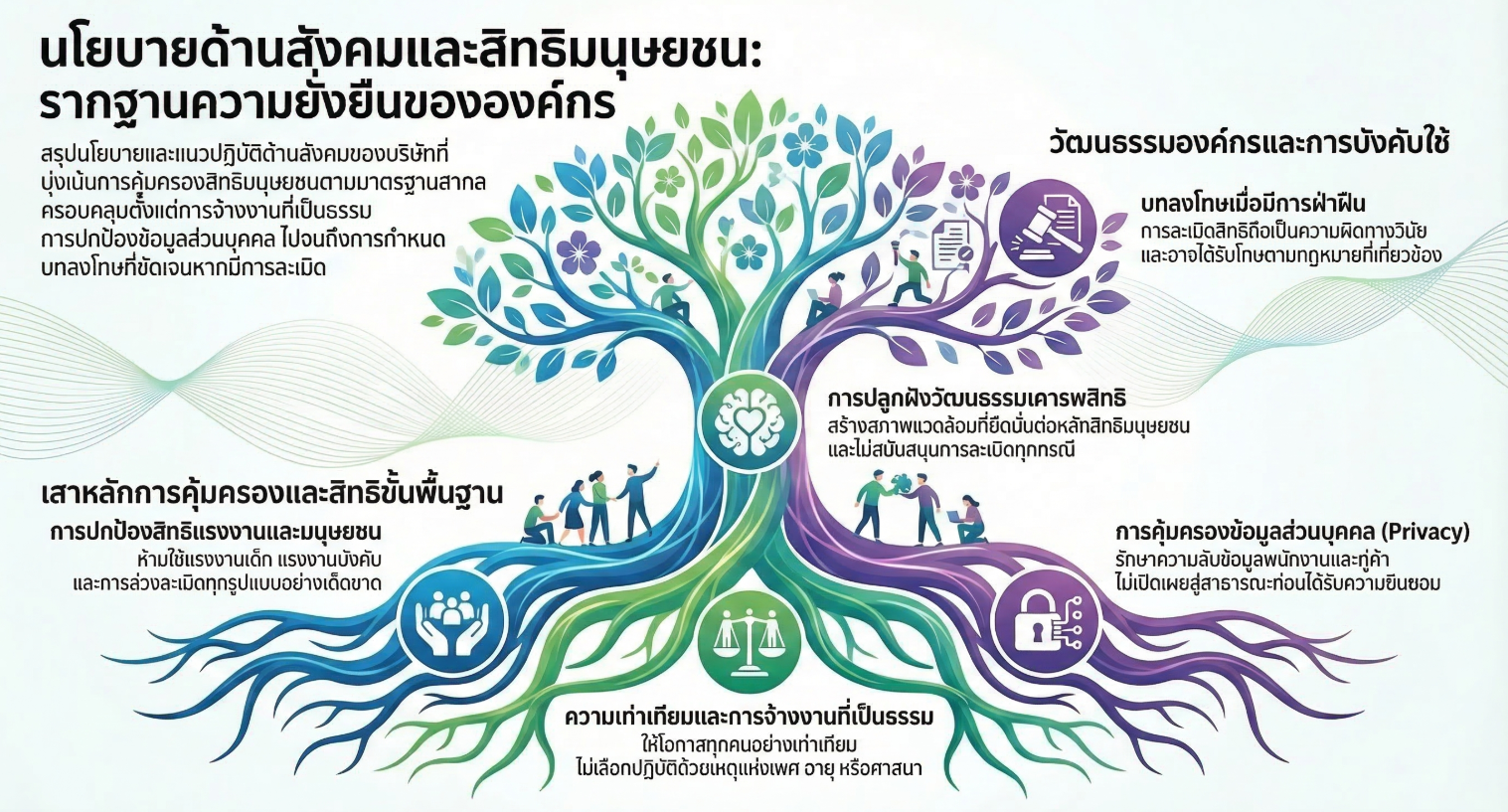
The company is committed to protecting human rights, adhering to the key principles outlined in the policy statement as follows:
1. Protection of Human and Labor Rights: Support and respect the protection of human rights, and will not be involved in human rights violations, such as not using forced labor, not employing child labor, not harassing or abusing physically or mentally, while also ensuring strict compliance with labor protection laws.
2. Universal Principles in Employment: Respect and adhere to universal principles in employment, treating all stakeholders fairly, providing equal opportunities to everyone without discrimination, and not violating fundamental rights such as gender, age, religion, race, physical condition, political opinions, etc.
3. Fostering an Organizational Culture: Establish and maintain an organizational culture committed to respecting human rights in accordance with the human rights policy, and not support or promote any activities that violate human rights principles.
4. Personal Data Protection: Encourage all employees to prioritize and comply with various policies related to personal data protection, safeguarding personal data of employees, customers, partners, etc. The disclosure or transfer of personal data of employees, customers, partners, etc., to the public may only be done with the consent of the employees, customers, partners, etc., unless carried out in accordance with company regulations or legal requirements.
5. Enforcement and Penalties: Any individual who commits a human rights violation shall be deemed to have breached the company's code of conduct and this policy, and will be subject to disciplinary action in accordance with company regulations. If the act constitutes a legal offense, it may also be subject to legal penalties.
Has a Social Policy
Yes
Policy Description
Social and Human Rights Practice
To concretely drive social and human rights policies to achieve tangible results, the company has established operational guidelines, integrating them with the four key social dimensions of sustainability (Materiality Topics) as follows:
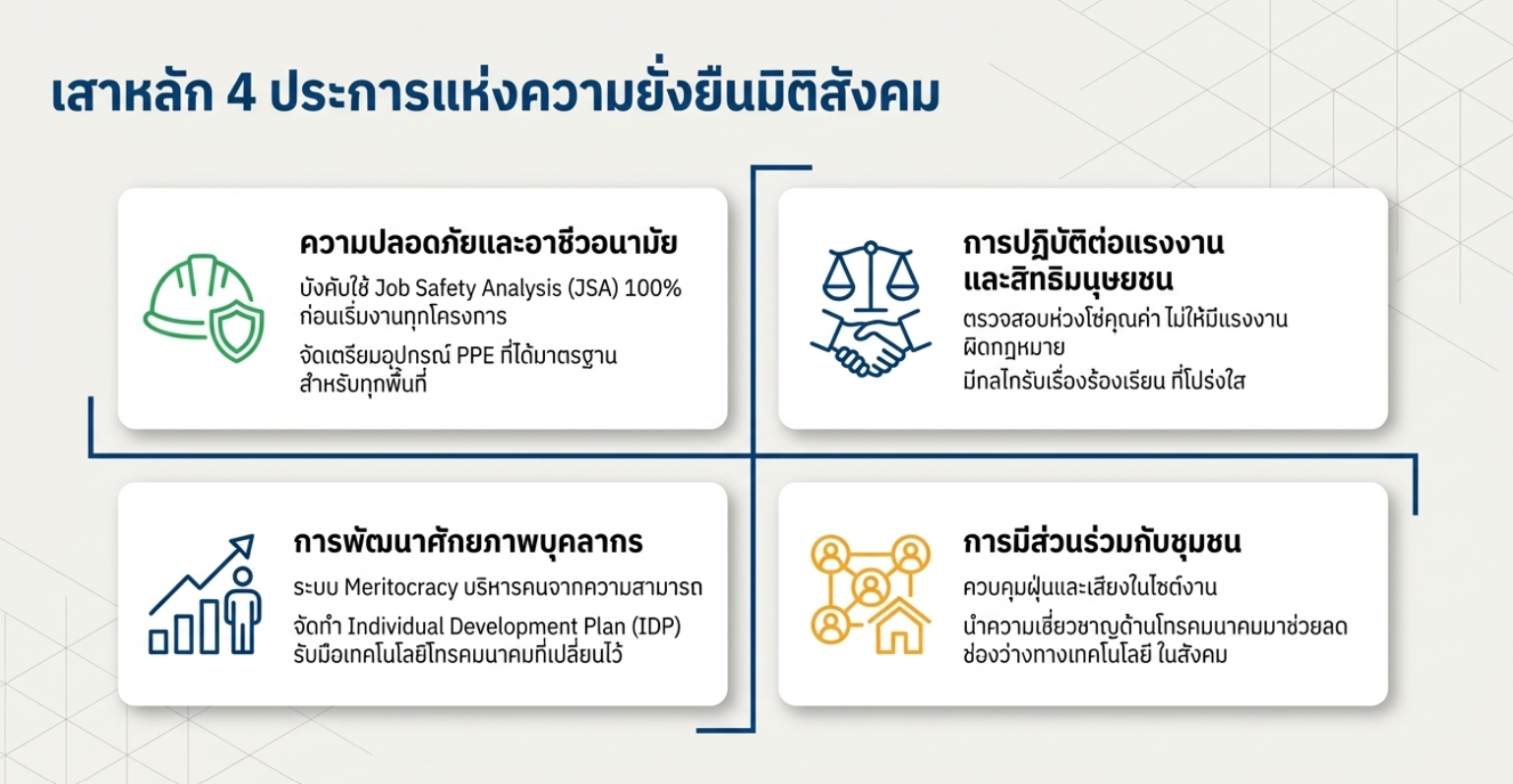
1. Safety, Occupational Health, and Working Environment: Elevating safety standards in all operational sites (Site Operation) and offices by strictly enforcing 100% Job Safety Analysis (JSA) before commencing work on all projects. This includes providing standard Personal Protective Equipment (PPE) and aiming for zero Lost Time Injury (LTI) to protect the quality of life of personnel and sub-contractor teams, as well as ensuring a hygienic and safe working environment.
2. Human Resource Development and Talent Attraction: Human resource management based on meritocracy to attract and retain high-potential personnel, providing fair opportunities for employment, compensation, and promotion. This is coupled with the development of Individual Development Plans (IDPs) and continuous upskilling/reskilling training hours to enhance the expertise of personnel, enabling them to adapt and keep pace with rapidly changing telecommunications technology.
3. Human Rights and Fair Labor Practices: Strict monitoring of employment processes throughout the value chain, stipulating that all Turnkey system installation projects must be free from child labor, forced labor, and discrimination (Zero Violation). This includes contracting and overseeing sub-contractors, as well as rigorously protecting the personal data of employees and stakeholders in accordance with the law (PDPA). Furthermore, a transparent and fair grievance mechanism has been established to equally protect everyone's fundamental rights.
4. Community and Social Engagement in Accessing Technology and Digital Services: Fostering good relationships and mitigating operational impacts on communities through measures to manage dust, noise, and safety at construction sites to avoid disturbing the residential rights of nearby communities. Furthermore, the organization focuses on applying its expertise in telecommunications and information technology to support infrastructure, communication networks, and promote widespread access to digital services for society, thereby sustainably reducing the digital divide.
Policy Document Link
https://www.icn.co.th/a/download/file/231-E-21.pdf
Page Number in Report
195
Social Guidelines
| Guideline |
|---|
| Employee Rights |
| Migrant Workers |
| Child Labor |
| Consumer Rights |
| Community and Environment Rights |
| Safety and Occupational Health at Work |
| Non-discrimination |
| Business Partner Rights |
Human Rights Due Diligence
Conducts Human Rights Due Diligence
Yes
Due Diligence Description
The company has systematically driven a comprehensive Human Rights Due Diligence (HRDD) process to ensure that it can effectively identify, prevent, mitigate, and account for potential human rights impacts arising from its business operations.
with 5 key operational steps as follows:
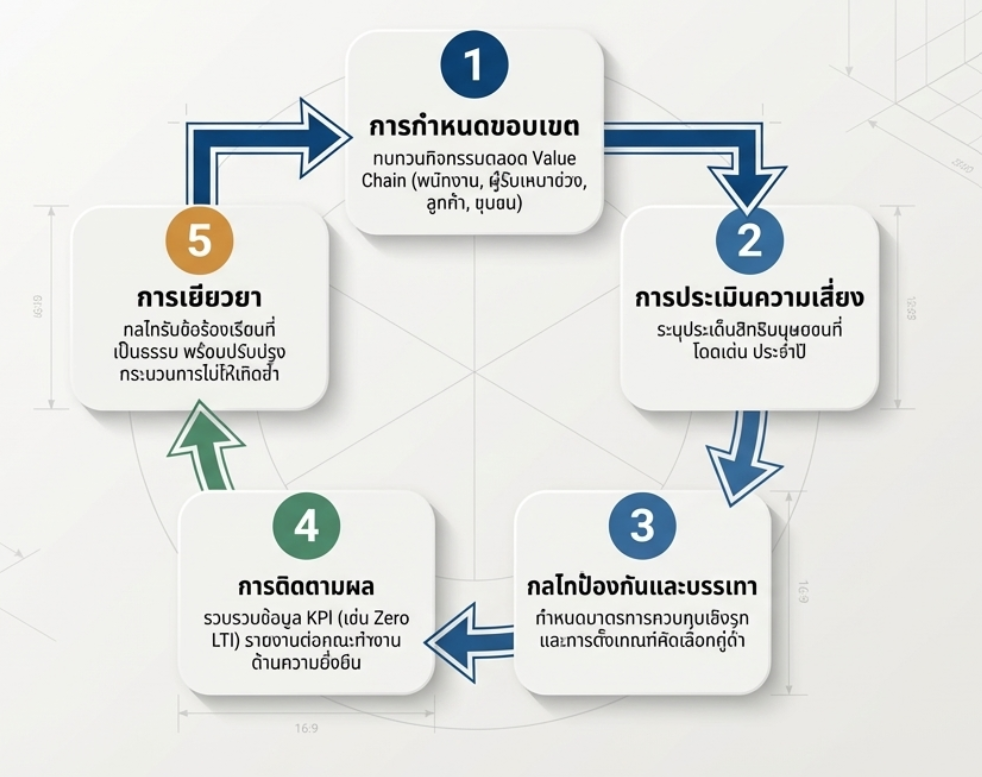
1. Scoping and Issue Identification for Human Rights
The company initiated the HRDD process by reviewing business activities throughout the value chain of its telecommunications system installation (Turnkey) business to define the scope of potentially affected stakeholders, which include: 1) company employees, 2) subcontractor workers, 3) customers, and 4) communities around project areas. Subsequently, human rights issues related to operations were identified, such as safety and occupational health, employment conditions and non-discrimination, personal data protection, and environmental impacts on communities.
2. Human Rights Risk Assessment
In 2025, the company conducted a human rights risk assessment to identify Salient Human Rights Issues. The assessment results indicated that the organization's most significant risks are:
-
On-site Work Safety: Risk of accidents from working at heights or equipment installation for both employees and subcontractor workers
-
Treatment of Workers in the Supply Chain: Risk of labor law violations among subcontractors
-
Data Privacy: Risk of leakage of corporate customer data and employee data
3. Risk Mitigation and Preventive Mechanisms
To prevent and mitigate salient risks, the company has established proactive control mechanisms as follows:
-
Safety: Enforcing 100% Job Safety Analysis (JSA) before commencing all projects, along with strict adherence to Personal Protective Equipment (PPE) requirements.
-
Personal Data: Strictly elevating cybersecurity standards in accordance with the Personal Data Protection Act (PDPA).
-
Supply Chain (2026 Plan): To address the risk concerning subcontractor workers, the company is preparing to incorporate human rights criteria into its annual partner selection and evaluation requirements, thereby establishing a preventive mechanism from the outset.
4. Tracking and Reviewing Human Rights Risks
The company mandates performance monitoring through clear Key Performance Indicators (KPIs), such as zero Lost Time Injury (LTI) statistics and zero human rights violation complaints. This data is collected and reported to the ESG Committee and management to annually review the effectiveness of preventive measures and adapt them to changing business contexts.
5. Remediation Mechanism in Case of Violations
Recognizing the importance of access to remedy, the company has established an accessible, transparent, and fair Whistleblowing/Grievance Mechanism through channels specified in its Business Ethics Handbook, which includes "Whistleblower Protection Policy (Non-retaliation Policy)" strictly. If the investigation process reveals actual human rights violations, the company has established appropriate and fair remediation processes to immediately mitigate harm to affected parties, alongside disciplinary action against perpetrators and process improvements to prevent recurrence.
Employees — Plan & Guidelines
Has an Employee Management Plan
Yes
Plan Description
Information and Communication Networks Public Company Limited ("the Company") considers its employees to be its most valuable resource and a crucial mechanism for delivering quality telecommunication network services. Therefore, the Company is committed to improving the quality of life and working environment, with the following operational framework:
Employee and Labor Management Plan
The Company has established a human resource master plan aligned with its social and human rights policies, focusing on 3 main pillars:
1) Management based on Meritocracy & Equality
2) Future Skills Development to accommodate rapidly changing ICT technology
3) Fostering a Proactive Safety Culture in all project operational areas
Plan Areas
| Plan Area |
|---|
| Fair employee compensation |
| Employee training and development |
| Promoting employee relations and participation |
| Migrant/foreign labor |
| Child labor |
| Occupational health and safety in workplace |
Employees — Workforce
Introduction
-
Employee and Labor Management: Employment
The company strictly adheres to labor protection laws, upholding the principles of equality and non-discrimination. The recruitment and selection process is open to individuals with knowledge and abilities, without discrimination based on gender, age, religion, or educational institution. The company clearly declares its intention to oppose all forms of child labor, forced labor, and illegal labor, both for permanent employees and in the supervision of sub-contractors working on the company's projects.
Employees with Disabilities — Introduction
The Company strictly adheres to the requirements of the Persons with Disabilities Empowerment and Development Act B.E. 2550 (2007) by employing persons with disabilities in accordance with the legally mandated proportion. This action reflects the Company's commitment to complying with relevant laws and supporting the creation of career opportunities for persons with disabilities. The Company monitors its operations to ensure they are accurate, complete, and transparent, in line with good governance principles and the requirements of relevant government agencies.
Workforce Data
| Metric | Current Year | Previous Year | Two Years Ago |
|---|---|---|---|
| Total number of employees (Persons) | 77 | 343 | 350 |
| Number of male employees (Persons) | 58 | 150 | 160 |
| Number of female employees (Persons) | 19 | 193 | 190 |
| Total employment of disabled persons (people) | 3 | 3 | 4 |
| Total disabled employees (people) | 3 | 3 | 4 |
| Total male disabled employees (people) | 2 | 2 | 2 |
| Total female disabled employees (people) | 1 | 1 | 2 |
| Total disabled workers who are non-employee (people) | 0 | 0 | 0 |
| Contributions to the fund for promoting and improving the quality of life for disabled persons | 0 | 0 | 0 |
| Total number of male employees in operational level (Persons) | 32 | 131 | 137 |
| Total number of male employees in management level (Persons) | 17 | 11 | 13 |
| Total number of male employees in executive level (Persons) | 9 | 8 | 10 |
| Total number of female employees in operational level (Persons) | 13 | 186 | 182 |
| Total number of female employees in management level (Persons) | 4 | 5 | 6 |
| Total number of female employees in executive level (Persons) | 2 | 2 | 2 |
Employees — Remuneration & Provident Fund
Introduction
-
Employee and Labor Management: Compensation
The Company has a fair and competitive compensation management policy within the telecommunications and information technology industry (Market Competitiveness). Annual salary adjustments and bonus payments are based on individual employee performance appraisals (Performance Appraisal) combined with the Company's overall operating results. Furthermore, the Company provides appropriate welfare benefits that cover basic needs, such as a provident fund, health insurance, accident insurance, and annual health check-ups, to ensure the financial security of its personnel.
Remuneration & Provident Fund
| Metric | Current Year | Previous Year | Two Years Ago |
|---|---|---|---|
| Total disabled employees (people) | 142,129,086.17 | 143,869,739.12 | 147,279,203.89 |
| Total male employee remuneration (Baht) | 89,338,715.48 | 88,335,043.18 | 95,138,092.55 |
| Total female employee remuneration (Baht) | 52,790,370.69 | 55,534,695.94 | 52,141,111.34 |
| Number of employees eligible to participate in PVD (persons) | 58 | 53 | 51 |
| Total number of employees joining employee provident fund (Persons) | 58 | 53 | 51 |
| Percentage of total number of employees joining employee provident fund to total number of employees (%) | 75.32 | 15.45 | 14.57 |
| Number of PVD members / Total eligible employees (%) | 100 | 100 | 100 |
| Total amount of provident fund contributed by the Company (Baht) | 3,233,876.32 | 2,992,986.55 | 3,090,902.23 |
| Total amount of provident fund contributed by employee (baht) | 3,233,876.32 | 2,992,986.55 | 3,090,902.23 |
Employees — Training & Development
Introduction
-
Employee and Labor Management: Training and Development
To maintain competitiveness, the company has continuously developed Individual Development Plans (IDP) and organized training courses (Upskill/Reskill). In 2025, the company implemented employee skill development and training programs in various areas, totaling 42 courses, to enhance potential and readiness for future challenges. The development is divided into 5 main groups as follows:
-
Development of specialized skills aligned with job functions to increase work efficiency and enhance expertise.
-
Exchange and dissemination of knowledge among employees or from external experts to enhance internal organizational learning.
-
Development of language proficiency for effective communication and alignment with international work requirements.
-
Development of leadership skills and interpersonal skills to enhance team management capabilities and collaboration.
-
Training on legal or international requirements and standards to ensure employees perform their duties correctly.
Company activity plans that support employee development.
The company plans to provide Online Learning System (E-Learning Platform) which is a crucial tool to support employee learning, allowing employees to access learning content anytime, anywhere through the system. Learning Modules designed to align with job functions and the skill development needs of employees in each position.
The implementation of the E-Learning system also increases opportunities for employees to access learning comprehensively, promotes an organizational culture of learning (Learning Organization), and supports the sustainable development of personnel potential.
-
Training on Cyber Security Awareness & Prevention.
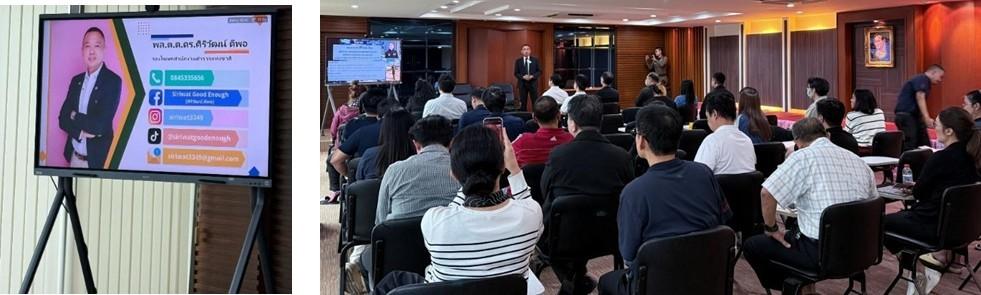
-
AI & Data Center Facilities Beginning Certification Training (In-House Training)
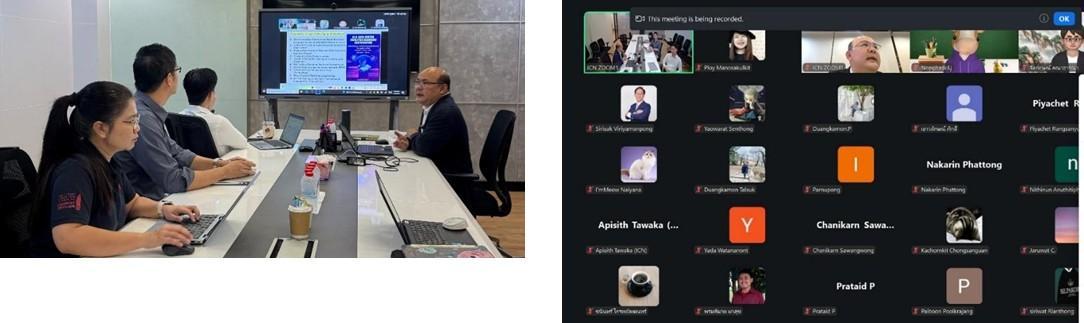
Training Data
| Metric | Current Year | Previous Year | Two Years Ago |
|---|---|---|---|
| Average employee training hours (Hours / Person / Year) | 7.55 | 5.98 | 6.87 |
| Employee development and training expenses (baht) | 168,810 | 462,042.86 | 553,923.16 |
Employees — Occupational Health & Safety
Introduction
The company places great importance on safety, occupational health, and the working environment to prevent accidents, reduce operational risks, and create a healthy environment for employees. In 2025, the company organized training and provided knowledge on safety by its professional safety officers.
The aforementioned training covers topics related to occupational safety laws, risk assessment, accident prevention, the use of Personal Protective Equipment (PPE), and emergency response procedures, aiming to enhance knowledge, understanding, and safety awareness among employees at all levels.
These operations reflect the company's commitment to continuously elevating safety standards, reducing losses from accidents, and fostering a safety culture within the organization, which will lead to efficient and sustainable work.
Employee and Labor Management: Occupational Health, Safety, and Environment
Due to the nature of its turnkey system installation contracting business, which involves on-site accident risks, the company prioritizes safety (Safety First) by enforcing Job Safety Analysis (JSA) processes before commencing any work. Personal Protective Equipment (PPE) is fully provided to employees and technical teams. For office areas, the company has arranged a hygienic working environment with good ventilation, adequate lighting, and regular safety inspections of the premises to prevent occupational health risks.
Occupational Health & Safety Data
| Metric | Current Year | Previous Year | Two Years Ago |
|---|---|---|---|
| Total number of lost time injury incidents by employees (Cases) | 0 | 0 | 0 |
Employees — Labour Relations
Introduction
-
Employee and Labor Management: Employee Engagement and Internal Association.
In 2025, the company initiated an "Employee Engagement Survey" to systematically gather feedback and suggestions across various dimensions. The results were analyzed to develop plans for improving the working environment and welfare benefits to better meet the needs of personnel, while also respecting employees' rights to association, thereby fostering a supportive and unified work atmosphere.
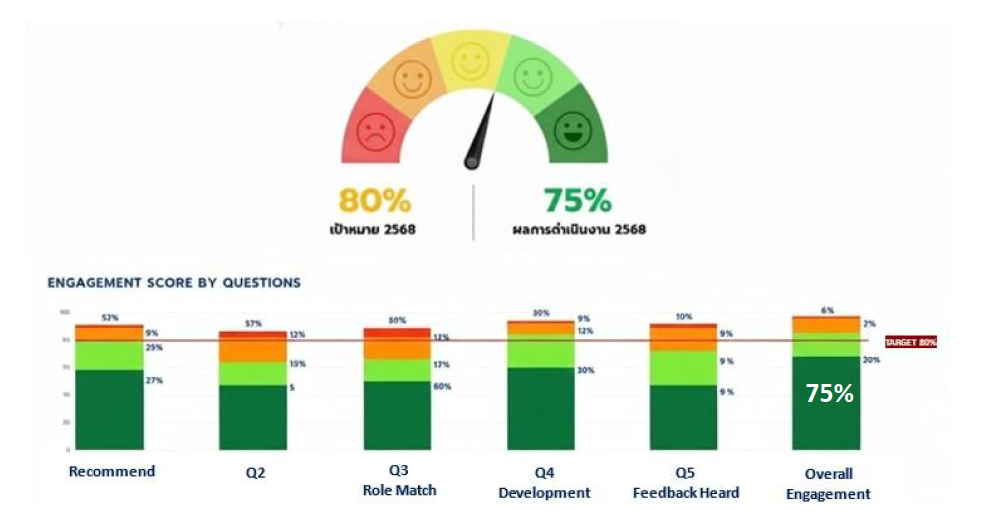
In-depth Engagement Analysis (Sentiment Analysis): From the in-depth data analysis, it was found that:
-
Organizational Pride (Ambassadors): Over 75% of employees are willing to recommend ICN Company to others for employment. Reflecting strong Brand Loyalty.
-
received the highest score, indicating that the company's Health & Safety policies are on the right track.
-
<9iCVjG7hJGl9_espace> Approximately 25% of respondents indicated "Neutral" combined, representing a group that the company can convert into highly engaged employees (Passive to Active).
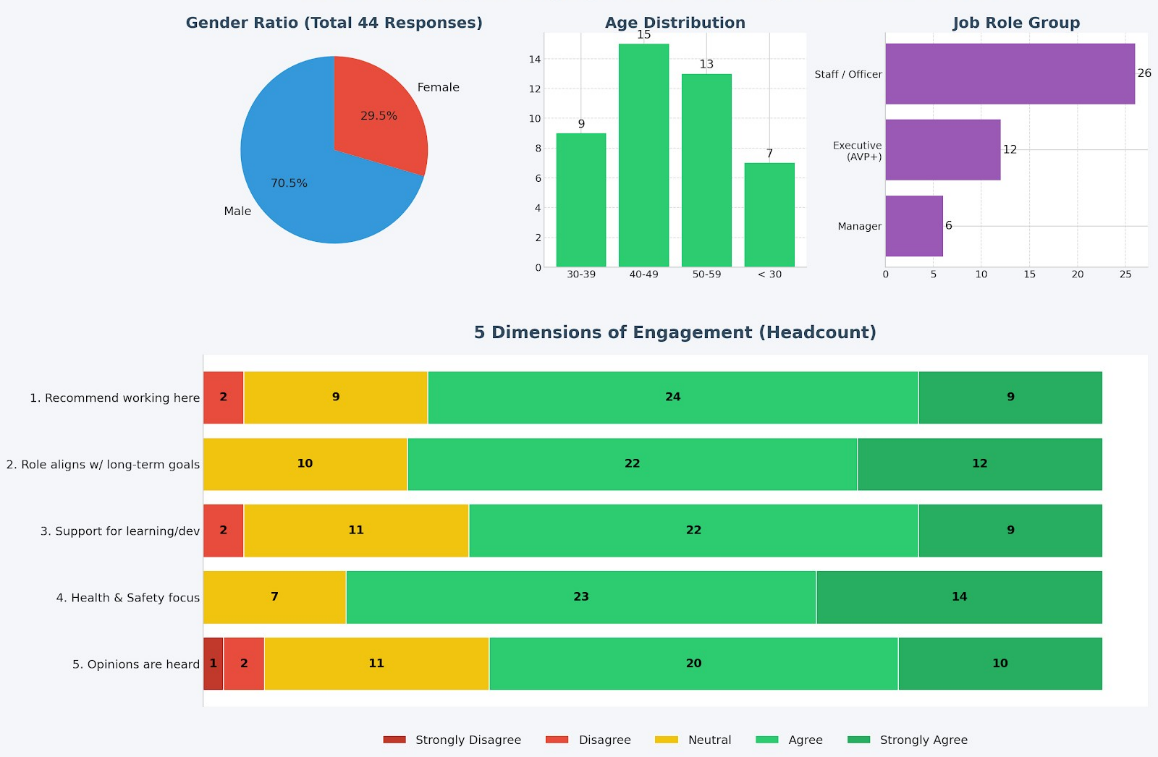
Labour Relations Data
| Metric | Current Year | Previous Year | Two Years Ago |
|---|---|---|---|
| Total voluntary resignations (Persons) | 24 | 72 | 39 |
| Male employees who voluntary resigned (Persons) | 12 | 37 | 27 |
| Female employees who voluntary resigned (Persons) | 12 | 35 | 12 |
| Percentage of employee turnover leaving the Company voluntarily (%) | 31.17 | 20.99 | 11.14 |
| Evaluation result of employee engagement | 1 | 0 | 0 |
Employees — Employee Representation
Introduction
-
Employee Grouping within the Organization (Freedom of Association and Employee Representation)
The company respects the rights and freedoms of employees to associate and form groups as stipulated by law (Freedom of Association). The company promotes the establishment of "Welfare Committee" comprising representatives from each department's employees, to act as representatives in discussions, providing suggestions and advice to management regarding welfare arrangements, working environment, and the resolution of various complaints. This mechanism helps foster good labor relations, reduce conflicts, and build sustainable cooperation between employers and employees.
Employees Are Represented Collectively
Yes
Forms of Representation
| Form |
|---|
| Welfare committee |
Employees — Targets
Introduction
Setting Employee and Labor Management Goals:
-
Safety Goals: The Lost Time Injury Rate (LTIR) must be zero (Zero LTI).
-
Personnel Development Goals: Employees receive training to develop their potential for an average of not less than 10 hours/person/year.
-
Human Rights Goals: Zero complaints regarding discrimination or labor rights violations (Zero Violations).
Has Set Employee Targets
No
Employees — Performance & Outcomes
Introduction
Performance and Outcomes in Employee and Labor Management
In 2025, the company successfully achieved its primary safety goals, with no serious work-related accidents. Additionally, it initiated an employee engagement survey project and allocated training hours according to the established plan, reflecting the tangible effectiveness of human resource management.
1. Safety Goals and Statistics (Zero Accident)
The company successfully maintained a zero work-related accident rate.
Performance results in 2025 showed zero incidents of work-related injuries or accidents resulting in lost workdays.
Number of employee fatalities from work-related incidents: 0
2. Supervision and Monitoring of the Work Environment
Established a Safety, Occupational Health, and Work Environment Committee to consider policies, plans, and oversee safety within the establishment.
Professional engineers were arranged to conduct the operations. Annual inspection and certification of electrical systems and equipment. (Results reported on June 12, 2025) to prevent hazards from fire incidents and electrical leakage.
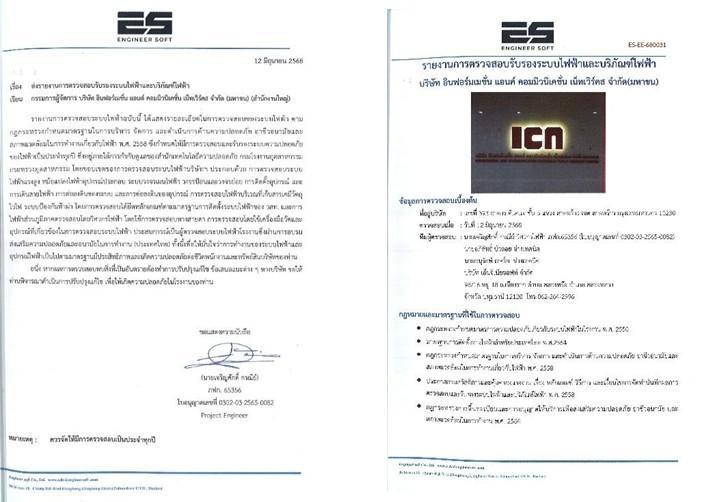
Arranged for external agencies to enter. Environmental quality and workplace environment monitoring (Conducted in February 2025), including measuring the intensity of lighting in the office to ensure compliance with legal standards and suitability for visual health.
3. Safety Training
Organized an online training course on safety, occupational health, work environment, and safety laws, with a professional safety officer serving as the instructor. The aforementioned training was attended by 160 employees and was extended to contractors, with 47 contractors participating.
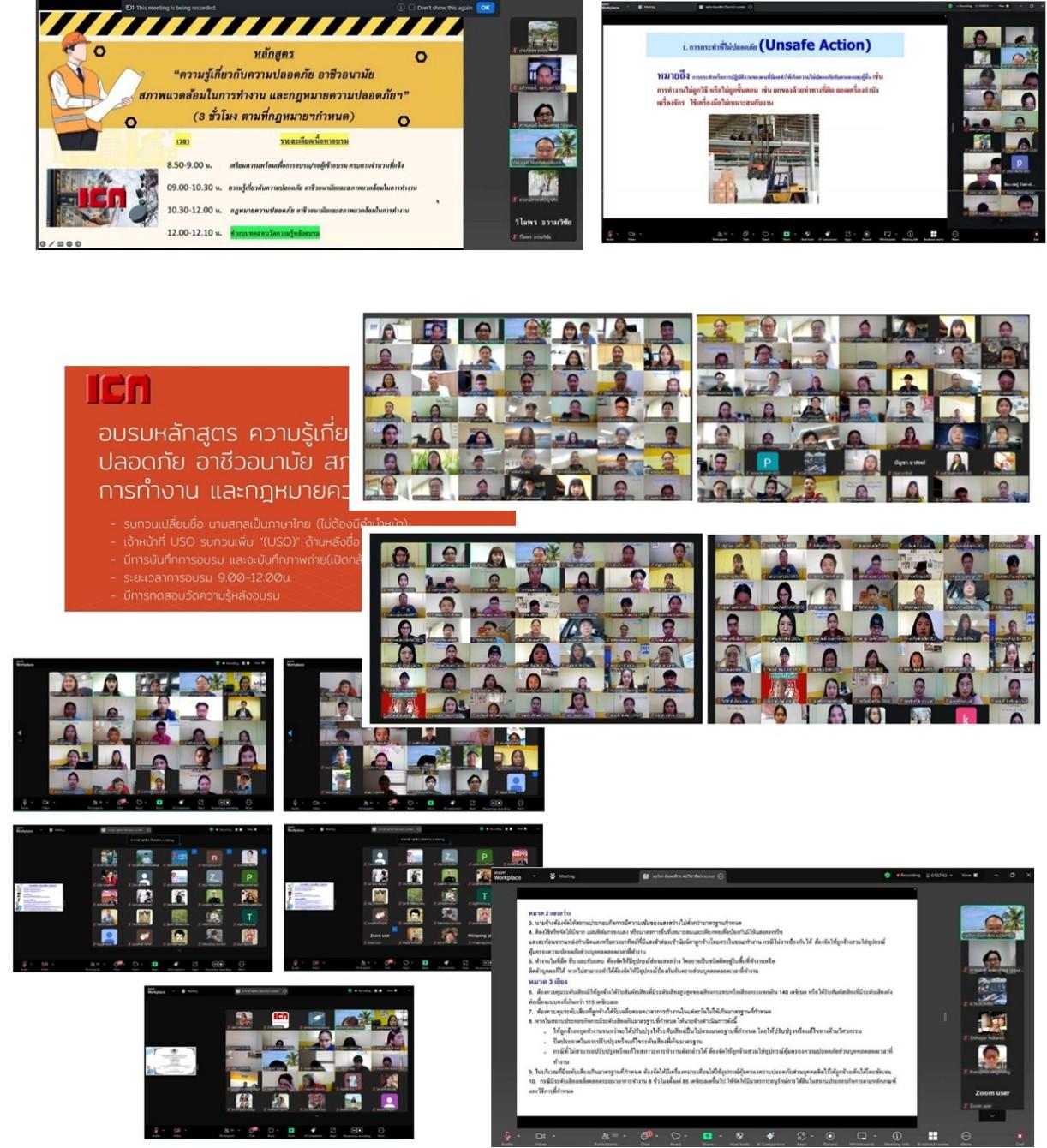
Organized a project for basic firefighting training, fire drill, and fire evacuation drill, with 30 employees participating.
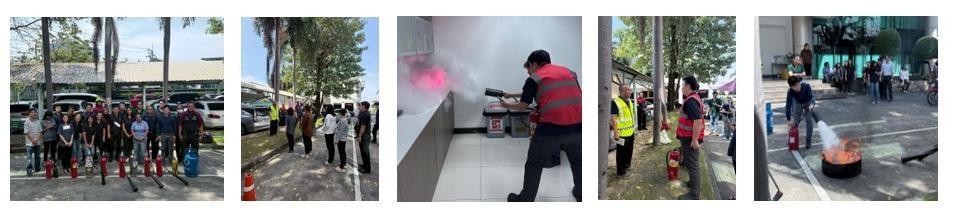
Four employees attended a basic first aid training course at the Thai Red Cross Society to acquire skills and proficiency in providing initial assistance to accident victims.
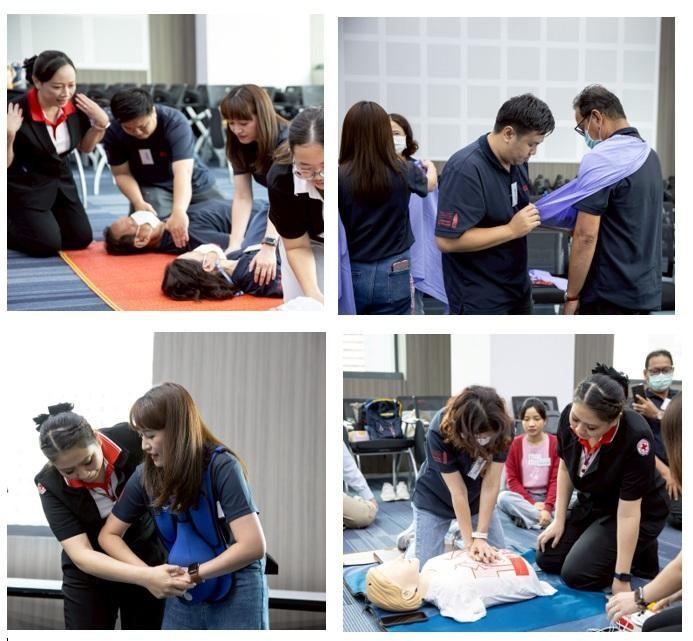
4. Health and Quality of Life Promotion
Arranged for annual health check-ups to monitor health risks for personnel. In 2025, 69 employees underwent health check-ups.
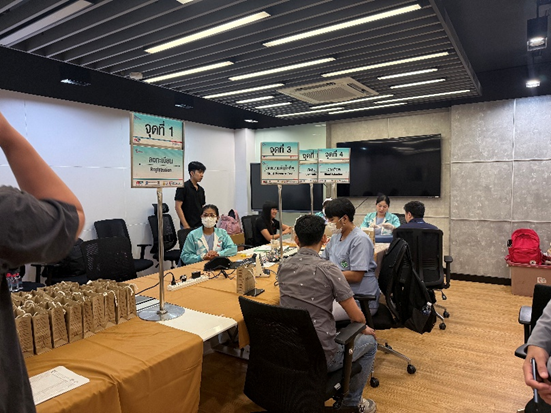
Regularly supported badminton activities every Friday to allow employees to exercise, relieve work-related stress, and foster good relationships within the organization.
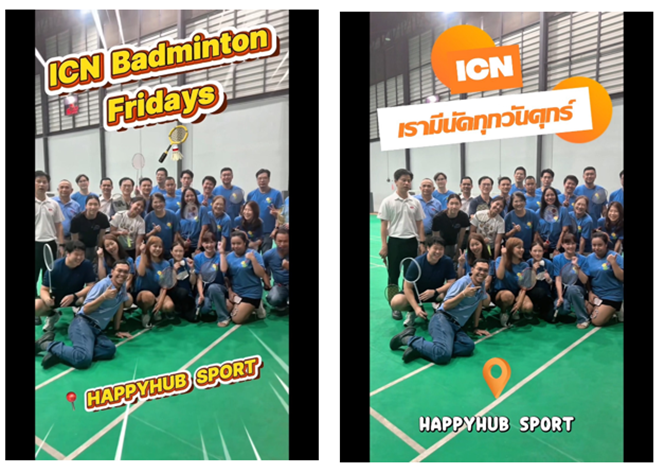
Has Performance Results
Yes
Performance Description
Study visit and attend in-depth lectures on trends and applications of AI technology from experts at Huawei Technologies (Thailand) Co., Ltd.
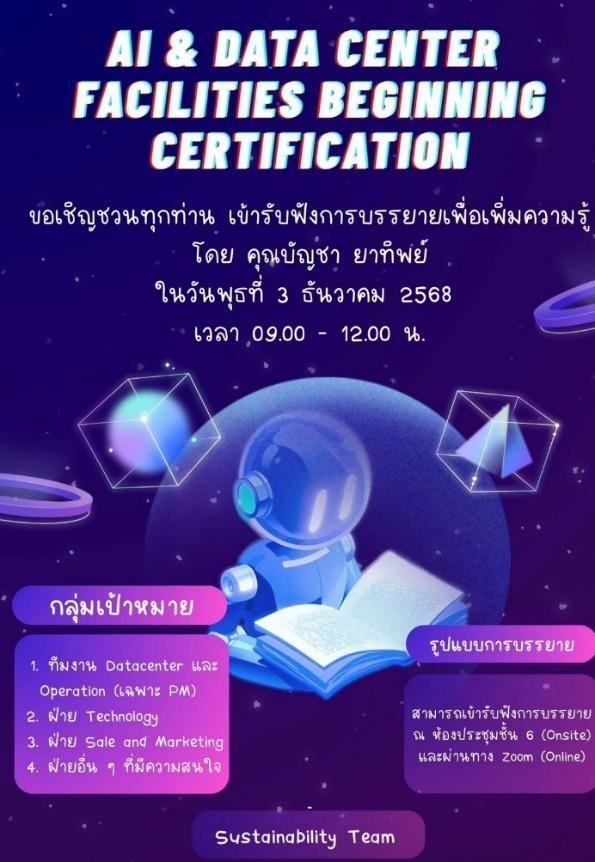
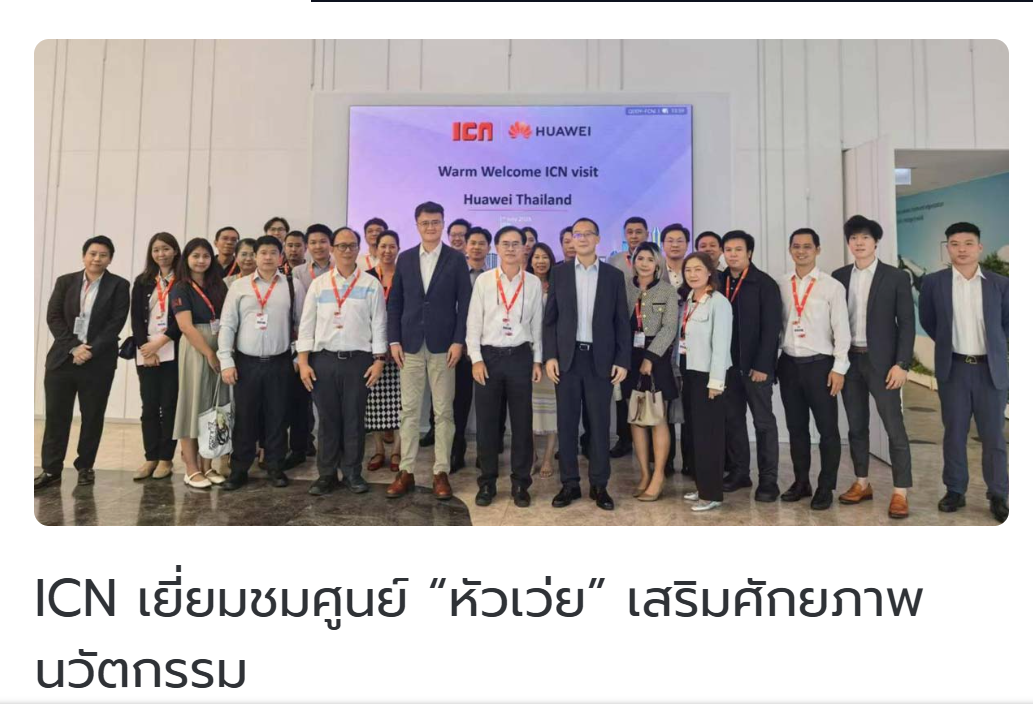
Customer Management — Overview
Introduction
Customer Information (Customer Information and Management)
Information and Communication Networks Public Company Limited ("the Company") operates a business providing turnkey telecommunication network installation services, whose main customer groups include government agencies, state enterprises, and large private organizations. The Company recognizes that customer trust and satisfaction are the most crucial foundations for sustainable business growth and for securing opportunities in continuous projects. Therefore, the Company is committed to delivering high-quality, safe services that maximally meet customer needs.
Customers — Plan & Guidelines
Has a Customer Management Plan
Yes
Plan Description
Customer Management Plan:
The company has systematically established a plan for managing customer relationships and expectations, covering the entire Project Lifecycle, as follows:
1. Maintaining Quality Management System Standards: Adhere strictly to the ISO 9001:2015 Quality Management System standards at every stage, from design, procurement, and installation to project delivery, to ensure that all project outcomes meet standards and comply with the customer's Terms of Reference (TOR).
2. Data Protection and Cybersecurity: Implement stringent measures for protecting the confidentiality of customer data and the security of telecommunication networks, in compliance with the Personal Data Protection Act (PDPA), to prevent data leakage in all dimensions.
3. Communication and Progress Monitoring: Regularly hold meetings with customer representatives to report project progress, promptly resolve on-site issues, and ensure transparency in operations.
4. After-Sales Service and Maintenance: Prepare a team of engineers and technicians ready to provide prompt and efficient troubleshooting and system maintenance services in accordance with warranty conditions.
Plan Areas
| Plan Area |
|---|
| Communication of product and service impacts to customers/consumers |
| Development of customer satisfaction and customer relationship |
| Protection of customer personal information |
Customers — Satisfaction Results
Introduction
In the past year 2568, the company conducted a customer satisfaction survey for projects that had reached their warranty expiration and undergone project closure. A total of 4 projects Executive Summary of Evaluation Results The customer satisfaction survey results from representatives of all 4 projects indicate that customers are satisfied at the level of "Excellent" in all dimensions, with an overall average score of 5.00 out of 5.00 (representing 100%), reflecting excellent operational standards and consistent service quality from inception to the end of the warranty period.
Detailed evaluation results by main category (evaluated out of a perfect score of 5.00)
1. Service — Average Score 5.00
-
Information on products and services is clear.
-
Coordination and work follow-up are seamless.
-
Staff provide service with attentiveness and courtesy.
2. Product/Service Delivery — Average Score 5.00
-
Delivery of products and services is on time and at the specified location.
-
Products and services are accurate and complete as per the contract.
-
Products are in perfect condition, with robust damage prevention measures.
-
Prompt resolution of immediate delivery issues.
3. Product/Service Quality — Average Score 5.00
-
Products and services meet customer requirements in terms of quality.
-
Promptness in service delivery upon customer request.
-
Proficient in effectively resolving quality-related issues for customers.
Voice of Customer
"ICN staff provided excellent problem-solving assistance." — A portion of customer feedback demonstrating confidence in the team's potential and readiness to provide after-sales service.
Customer Data Protection:
Throughout 2568, the company experienced no incidents of customer data breaches and received no complaints regarding privacy violations, reflecting the effectiveness of the information security systems implemented by the company.
Customer Satisfaction Results
| Metric | Current Year |
|---|---|
| Evaluation results of customer satisfaction | 1 |
Customers — Targets
Introduction
Setting Customer Management Targets (Customer Management Targets): To ensure that customer management can be measured concretely, the Company has set the following key annual targets:
-
Satisfaction Targets: Customer Satisfaction Score from post-project delivery evaluation must not be less than 80 percent.
-
Delivery Quality Targets: Ability to deliver work on schedule and pass acceptance according to the standards specified in the contract 100%.
-
Data Security Targets: Complaints regarding personal data breaches or loss of customer confidential information must be zero (Zero Data Breaches).
Has Set Customer Targets
No
Customers — Performance & Outcomes
Has Performance Results
No
Performance Description
Customer Management Performance and Results (Performance and Results):
In 2025, the company's performance reflected its commitment to customer management, as follows:
-
Maintaining international standard certifications: The company underwent a quality management system assessment and successfully passed the ISO 9001:2015 audit by a leading certification body, which reinforces customer confidence in its excellent operational processes.
-
Satisfaction assessment results: From the customer satisfaction survey for projects completed in 2025, it was found that customers gave an average satisfaction score of 100%, which is higher than the target set by the company. Customers expressed the highest satisfaction with the expertise of the engineering team and the prompt response to issues.
Building strong customer relationships:
-
Transparent and consistent communication: Providing accurate and comprehensive information, actively listening to customer feedback and suggestions, and disseminating timely information and updates regarding company developments.
-
Delivering excellent service: Responding to customer needs quickly and efficiently, resolving customer issues and complaints fairly and promptly, and creating a positive and seamless customer experience at every touchpoint.
-
Fostering trust and loyalty: Maintaining the confidentiality and privacy of customer data, prioritizing customer satisfaction and well-being, and building mutually beneficial long-term relationships with customers.
Responsible customer data management:
-
Data protection: Strictly adhering to laws and regulations related to data protection, implementing robust security measures to safeguard customer data, and establishing transparent mechanisms for data rectification.
-
Ethical use of data: Using customer data only for authorized and lawful purposes, refraining from misuse, unauthorized disclosure, or practices that may compromise customer privacy or security, and maintaining the highest standards of data privacy and security throughout all data management processes.
Community & Social — Overview
Introduction
Information and Communication Networks Public Company Limited ("the Company") recognizes its role and responsibility as a part of society. Although the Company operates a business providing telecommunication network installation contracting services, which does not have manufacturing facilities that permanently and directly impact surrounding communities, short-term impacts on communities may arise during the on-site installation and construction process (Site Operation). Therefore, the Company prioritizes managing such impacts, alongside leveraging its organizational technological expertise to create shared value (Creating Shared Value: CSV) to enhance the quality of life for people in society.
Community & Social — Plan & Guidelines
Has a Community & Social Plan
Yes
Plan Description
Community and Society Management Plan:
The company has established a comprehensive management plan covering both the prevention of negative impacts and the creation of positive impacts, as follows:
1. Project Impact Management (Impact Mitigation): Project managers and sub-contractors are required to communicate and engage with local communities or legal entities before commencing construction or system installation. Furthermore, measures to control dust, noise pollution, and traffic management at the work site must be enforced to avoid disturbing the residential rights and movement of the community.
2. Promotion of Technology Access (Digital Inclusion): Leveraging the company's capabilities and expertise in telecommunications engineering and information technology to support educational infrastructure, or to provide computer equipment and technology to underprivileged organizations or communities, thereby contributing to the reduction of the digital divide.
3. Promotion of Employee Participation (Employee Volunteering): Cultivating public consciousness by encouraging employees to participate in volunteer activities or corporate social responsibility (CSR) projects organized by the company.
Plan Areas
| Plan Area | Other — Please Specify |
|---|---|
| Others | 1. Impact Management from Project Implementation 2. Promoting Access to Technology 3. Promoting Employee Engagement |
Community & Social — Targets
Introduction
Setting Community and Society Management Targets (Community and Society Management Targets):
-
Impact Management Goals: Significant complaints from the community arising from the company's project operations must be zero (Zero Significant Community Complaints)
-
Social Development Goals: Implement at least 1 social and community project per year, focusing on education and access to technology.
Has Set Community & Social Targets
No
Community & Social — Performance & Outcomes
Has Performance Results
Yes
Performance Description
Performance and Results in Community and Social Management:
In 2025, the company implemented its plans and achieved the following results:
-
On-site Impact Control: Due to strict supervision of operational areas, throughout 2025, the company received no environmental complaints or nuisances from communities around the project area, reflecting the responsibility of the team and subcontractors.
-
Community and Social Projects: The company won the bid for the High-Speed Public Internet Service Center Project in Remote Areas (Zone C) in the Northeast, in collaboration with the Office of the NBTC, which has been driving the mission of providing high-speed internet services in remote areas (Broadband Internet Service) by defining 5 types of services, namely:
-
Provision of public Wi-Fi services in remote villages.
-
Provision of Public Internet Centers (USO Net Centers).
-
Provision of Public Internet Rooms (USO Wrap).
-
Provision of high-speed internet services for schools
-
Provision of high-speed internet services for Sub-district Health Promoting Hospitals (HPH).
The classification of the aforementioned operational groups is similar to projects in marginalized villages, aiming to increase operational efficiency and contract management, as well as to align with the expectation for the project to succeed rapidly.
Social Projects (CSR):
The company organized activities Project to provide scholarships and sports equipment to Ban Mong Kratae School. Tha Kradan Subdistrict, Si Sawat District, Kanchanaburi Province, with representatives from management and volunteer employees participating in the activities. 50 people to deliver Scholarships and sports equipment, and the paving of concrete in front of the school building and cafeteria. which helps enhance learning opportunities and improve the quality of life for students in schools.
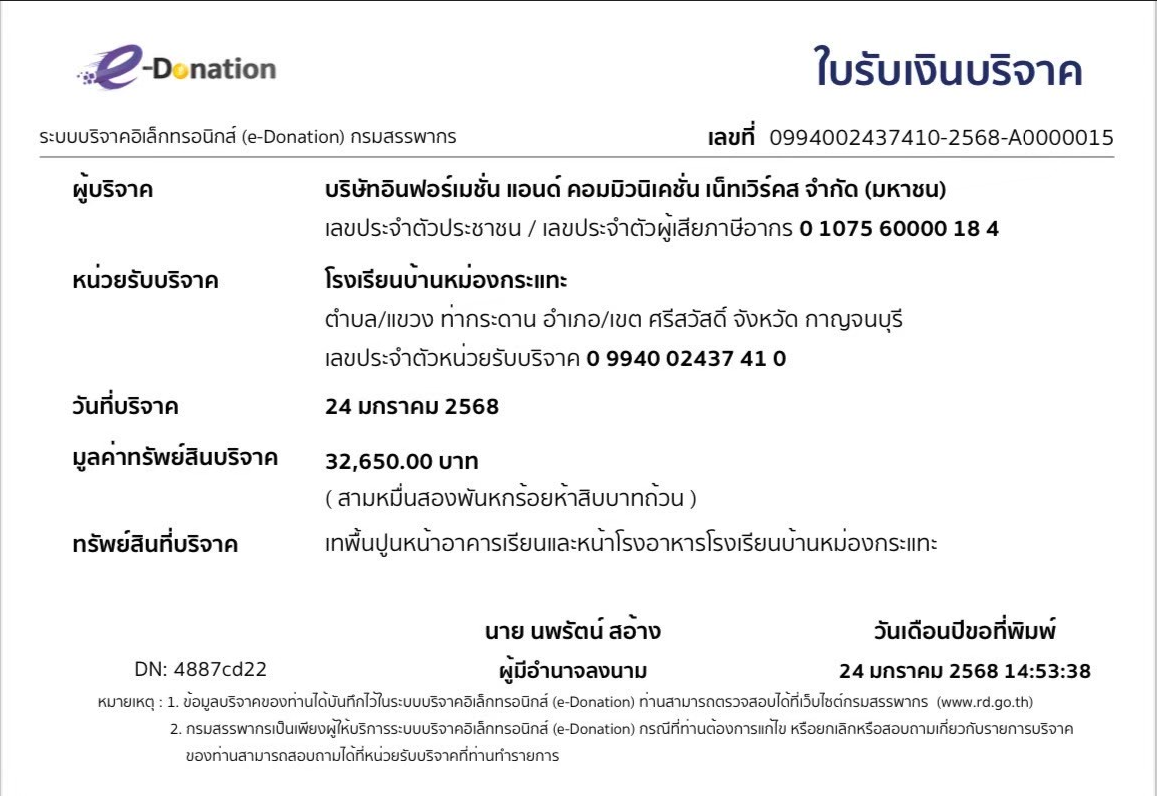
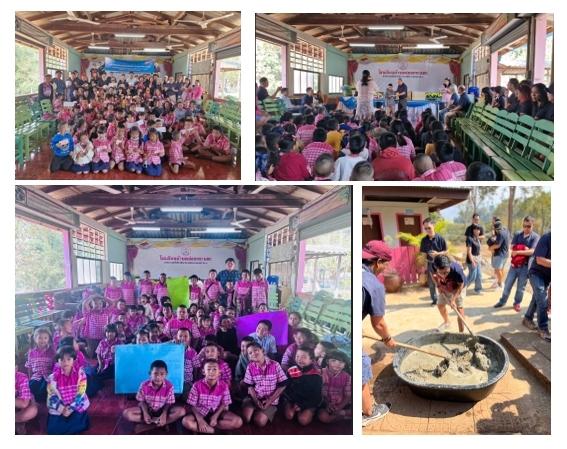
Law Violation Incidents
Law Violation Incidents
| Metric | Current Year | Previous Year | Two Years Ago |
|---|---|---|---|
| The total number of cases or incidents of significant violations of laws or regulations regarding social and human rights (Cases) | 0 | 0 | 0 |
| The total number of cases or incidents that cause significant labor disputes (Cases) | 0 | 0 | 0 |
| The total number of cases or complaints related to consumer rights violations (Cases) | 0 | 0 | 0 |
| The total number of cases or complaints related to partner rights violations (Cases) | 0 | 0 | 0 |
| The total number of cases or incidents that cause disputes with the community/society (Cases) | 0 | 0 | 0 |
| The total number of cases or incidents related to cyber security or customer data breaches (Cases) | 0 | 0 | 0 |
| The total number of cases or incidents related to safety and occupational health at work (Cases) | 0 | 0 | 0 |